
Do you know how to say “Don’t worry” in Russian naturally? Russian has many useful expressions for calming someone down, supporting a friend, or saying “no worries” when someone apologizes.
The most common phrase is Не переживай, but it is not the only option. Depending on the situation, you may also hear Не волнуйся, Не беспокойся, Успокойся, Ничего страшного, Не парься, Забей, and many other expressions.
Some of these phrases are polite and safe. Others are slangy, funny, or very informal. That is why it is important to learn not only the translation, but also the tone and context. If you are still building your basic vocabulary, start with these basic Russian phrases for beginners.
In this lesson, you will learn different ways to say “Don’t worry”, “calm down”, “no worries”, “take it easy”, and “don’t stress” in Russian.
Table of Contents
Different ways to say “Don’t worry” in Russian
“Не переживай” — The Safest Way to Say “Don’t Worry”
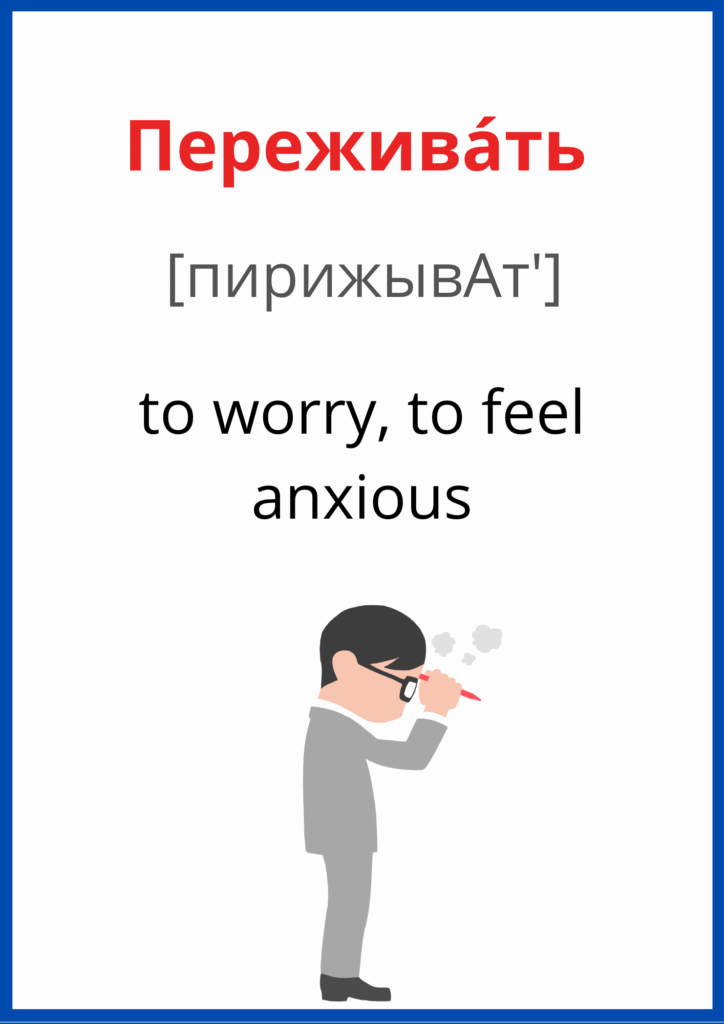
The expression Не переживай is probably the most common and natural way to say “Don’t worry” in Russian. It comes from the verb переживать, which can mean “to worry”, “to feel anxious”, or “to be upset about something”.
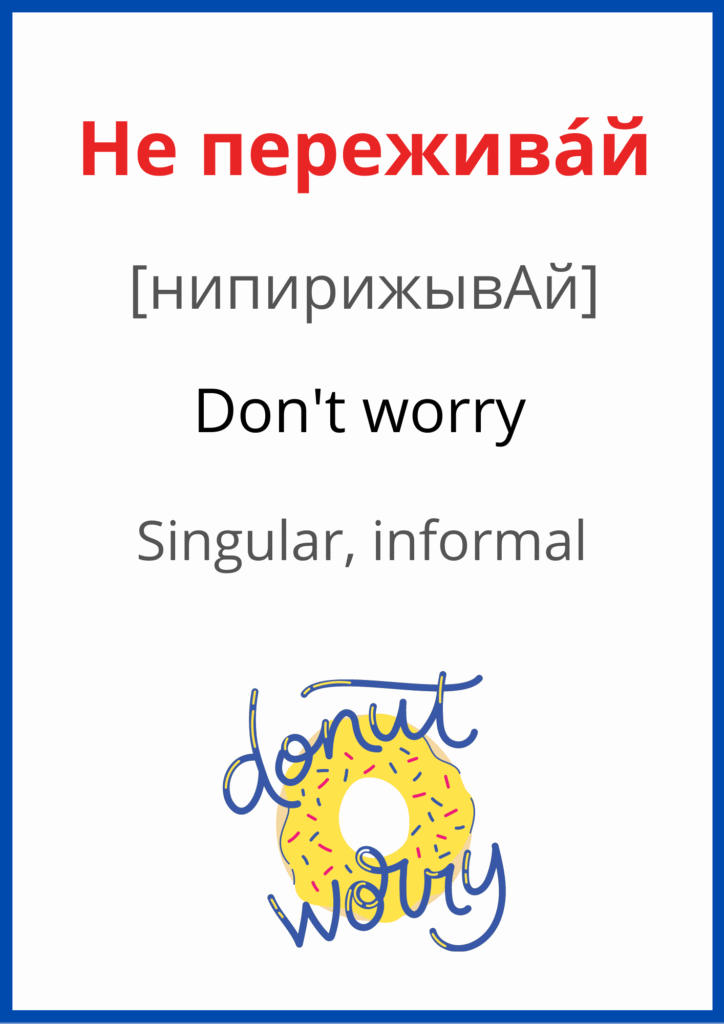
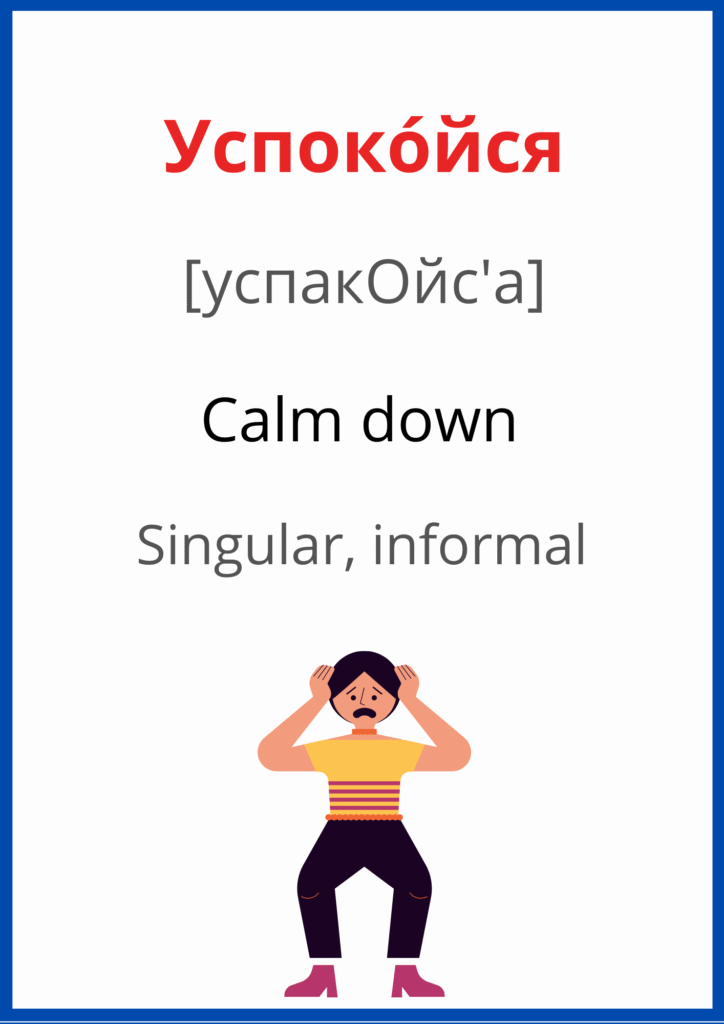
Use Не переживай in informal situations, when you speak to one person you know well.
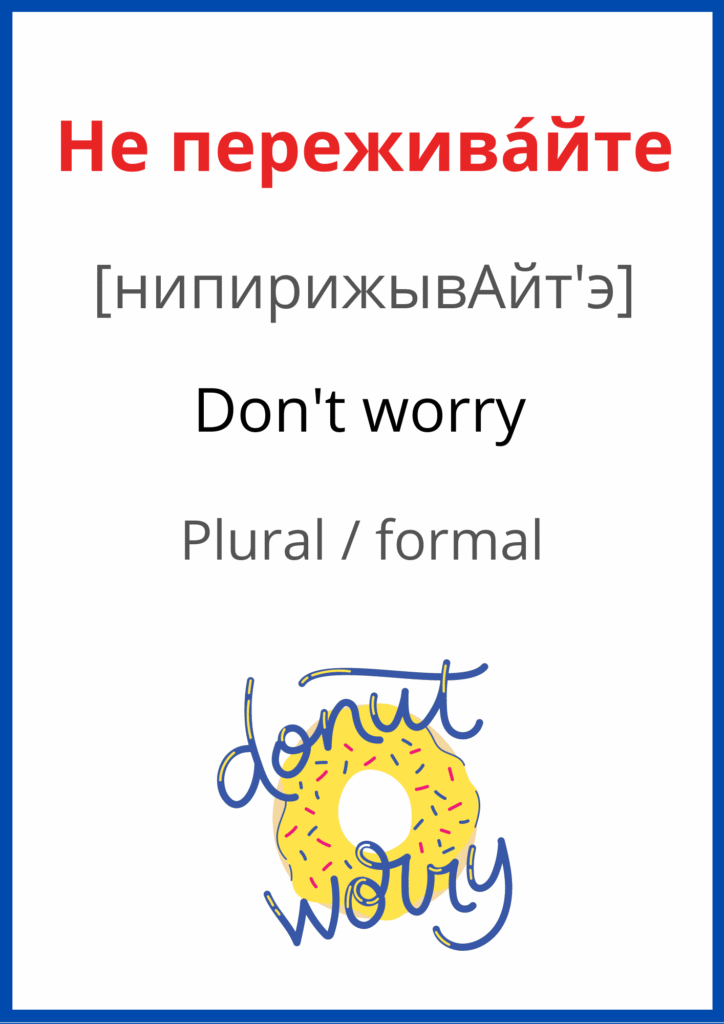
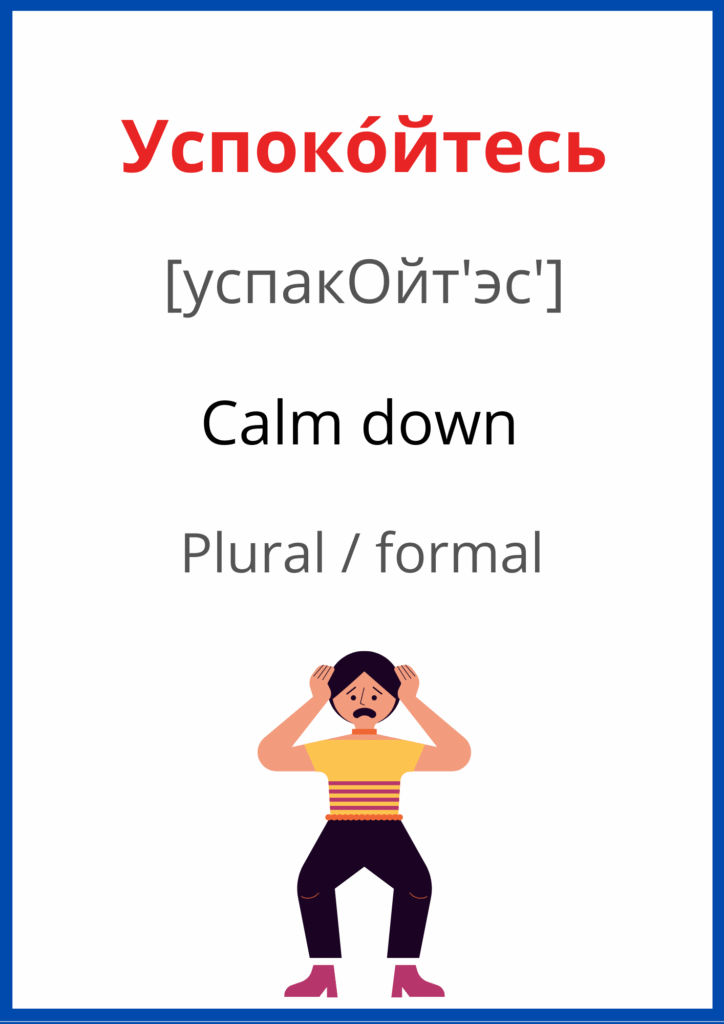
Use Не переживайте when you speak formally, politely, or to several people.
Note that all these expressions will be in imperative form.
The difference between ты and вы is very important here, so check my guide to Ты and Вы in Russian. This is also part of polite communication, just like other polite Russian words and phrases.
A very natural phrase is:
Не переживай, всё будет хорошо.
Don’t worry, everything will be alright.
You can use this phrase when someone is nervous before an exam, an interview, a trip, a doctor’s appointment, or an important conversation.
| Russian | English | Situation |
|---|---|---|
| Не переживай. | Don’t worry. | informal |
| Не переживайте. | Don’t worry. | formal / plural |
| Не переживай, всё нормально. | Don’t worry, everything is fine. | friendly |
| Не переживайте, всё будет хорошо. | Don’t worry, everything will be alright. | polite |
| Да не переживай ты так! | Oh, don’t worry so much! | emotional / informal |
“Успокойся” Can Sound Direct
The phrase Успокойся means “calm down”. It can be helpful, but it can also sound direct or even a little harsh if the person is already upset.
For example:
Успокойся! Calm down!
This may sound like an order. In a stressful situation, it can make the person feel even more irritated.
A softer version is:
Постарайся успокоиться. Try to calm down.
Давай спокойно всё обсудим. Let’s discuss everything calmly.
Всё хорошо, постарайся не волноваться. Everything is fine, try not to worry.
So, Успокойся is useful, but use it carefully. With close friends, it can sound normal. With someone you do not know well, a softer phrase is usually better.
If you want more supportive phrases, learn how to encourage someone in Russian.
Не переживай, Не беспокойся, Не волнуйся: What Is the Difference?
Next – Не волну́йся [нивалнУйса] / Не волну́йтесь [нивалнУйт’эс’] from the verb волнова́ться [валнавАца] – to be worried
These three expressions are very similar, but they are not always identical.
| Russian | Literal idea | Best English translation | Tone |
|---|---|---|---|
| Не переживай. | Don’t feel upset / anxious. | Don’t worry. | warm, common |
| Не беспокойся. | Don’t trouble yourself. | Don’t worry / Don’t bother. | polite, neutral |
| Не волнуйся. | Don’t be nervous / agitated. | Don’t worry / Don’t be nervous. | good before events |
| Успокойся. | Calm yourself down. | Calm down. | direct |
Use Не волнуйся when someone is nervous before something:
Не волнуйся, экзамен будет несложный. Don’t worry, the exam won’t be difficult.
Use Не беспокойся when you want to say that someone does not need to trouble themselves:
Не беспокойся, я сам всё сделаю. Don’t worry, I’ll do everything myself.
Use Не переживай when someone is emotionally worried or upset:
Не переживай, ты всё сделал правильно. Don’t worry, you did everything right.
Supportive Russian Phrases to Calm Someone Down
Sometimes “Don’t worry” is not enough. If someone is stressed, nervous, or sad, you can add a supportive phrase.
| Russian | English |
|---|---|
| Всё будет хорошо. | Everything will be alright. |
| Всё нормально. | Everything is fine. |
| Ничего страшного. | It’s not a big deal / Nothing terrible happened. |
| Такое бывает. | These things happen. |
| Ты справишься. | You can handle it. |
| Я с тобой. | I’m with you. |
| Я рядом. | I’m here for you. |
| Мы что-нибудь придумаем. | We’ll figure something out. |
| Не вини себя. | Don’t blame yourself. |
| Это не твоя вина. | It’s not your fault. |
These phrases sound more caring than simply saying Успокойся. They show that you are not only telling the person to stop worrying, but also supporting them emotionally.
Examples:
Не переживай, ты справишься. Don’t worry, you can handle it.
Ничего страшного, такое бывает. It’s not a big deal, these things happen.
Я с тобой, всё будет хорошо. I’m with you, everything will be alright.
These phrases are also useful when you want to wish luck in Russian before an exam, interview or important event.
When Someone Says Sorry: “Don’t Worry About It” in Russian
In English, “Don’t worry” can also mean “Don’t worry about it” when someone apologizes. In Russian, you can use several natural phrases.
| Russian | English | Tone |
|---|---|---|
| Ничего страшного. | No worries / It’s okay. | very common |
| Не переживай. | Don’t worry. | friendly |
| Всё нормально. | It’s all fine. | neutral |
| Ничего. | It’s okay. | short, casual |
| Да ладно, всё хорошо. | Come on, it’s fine. | casual |
| Не беспокойся об этом. | Don’t worry about it. | polite / clear |
Examples:
— Извини, я опоздал. Sorry, I’m late.
— Ничего страшного. No worries.
— Прости, я забыла тебе написать. Sorry, I forgot to text you.
— Не переживай, всё нормально. Don’t worry, it’s fine.
This is one of the most useful situations where you can use these expressions in real life.
How to Say “Don’t Be Nervous” in Russian
If someone is nervous before an exam, interview, performance, meeting, or trip, Не волнуйся often sounds more natural than Не переживай.
Here are useful examples:
| Russian | English |
|---|---|
| Не волнуйся, всё получится. | Don’t worry, everything will work out. |
| Не волнуйся, ты хорошо подготовился. | Don’t worry, you prepared well. |
| Не волнуйся, ты хорошо подготовилась. | Don’t worry, you prepared well. |
| Не переживай, у тебя всё получится. | Don’t worry, you’ll manage. |
| Главное — не волнуйся. | The main thing is: don’t be nervous. |
| Дыши. Всё будет хорошо. | Breathe. Everything will be alright. |
Pay attention to gender:
Ты подготовился — to a man
Ты подготовилась — to a woman
The phrase У тебя всё получится is very encouraging. It means something like “You will succeed” or “You can do it.”
Some of the next phrases are informal, so you may also enjoy learning more Russian slang words.
Be Careful with Russian Slang Expressions
Russian has many slang expressions that mean “don’t worry”, “calm down”, or “take it easy”. They can sound funny and natural among friends, but they are not always appropriate.
Do not use slang phrases like Не ссы, Забей, Не парься, or Не кипишуй in formal situations. Avoid them with teachers, doctors, clients, older people, or people you do not know well.
These expressions are better for casual conversations with friends.
For example:
Не парься — Don’t sweat it.
This sounds casual and friendly.
The phrase Не парься is an informal way to say “Don’t sweat it”, “Don’t stress about it”, or “Don’t overthink it.”
It comes from the slang verb париться, which means to worry too much, stress out, or bother yourself about something.
Examples:
Не парься, всё нормально.
Don’t sweat it, everything is fine.
Да не парься ты из-за этого!
Come on, don’t stress about it!
Не парься, я сам разберусь.
Don’t worry, I’ll figure it out myself.
This phrase is very common in casual Russian speech, but it is not formal. Use it with friends, classmates, colleagues you are close to, or people your age.
Не ссы — Don’t panic / Don’t be afraid.
This is very informal and can sound rude or vulgar depending on the situation. It is useful to understand this phrase, but you should be careful using it.
Because this phrase is very informal and close to vulgar speech, you may want to read about Russian swear words and euphemisms.
Забей — Forget About It
The slang expression Забей literally comes from the verb забить, but in casual speech it often means “forget about it”, “let it go”, or “don’t bother.”
Examples:
Забей, это неважно. Forget it, it’s not important.
Забей на это. Let it go / Don’t bother with it.
Да забей, ничего страшного. Forget it, it’s no big deal.
Be careful: Забей can sound dismissive if the problem is serious. If someone is really upset, it may be better to say:
Я понимаю. Не переживай, мы что-нибудь придумаем. I understand. Don’t worry, we’ll figure something out.
Остынь — Chill Out
The phrase Остынь literally means “cool down.” It is used when someone is angry, irritated, or too emotional.
Examples:
Остынь, пожалуйста. Please calm down.
Остынь, давай поговорим спокойно. Chill out, let’s talk calmly.
Сначала остынь, потом обсудим. Cool down first, then we’ll discuss it.
This phrase can sound direct, so it is better to use it with people you know well. With someone you do not know well, say:
Давайте спокойно всё обсудим. Let’s discuss everything calmly.
These expressions are common in real spoken Russian, especially in casual conversations, memes and movies.
Which Phrase Should You Use?
Here is a quick guide to help you choose the right phrase.
| Situation | Best Russian phrase |
|---|---|
| A friend is worried | Не переживай. |
| A stranger or client is worried | Не переживайте. |
| Someone is nervous before an exam | Не волнуйся. |
| Someone apologizes | Ничего страшного. |
| You want to sound supportive | Ты справишься. |
| You want to sound casual | Не парься. |
| You want to say “forget it” | Забей. |
| Someone is angry | Остынь. |
| Someone is panicking | Спокойно. Всё будет хорошо. |
| Formal situation | Не беспокойтесь. |
If you remember only three phrases, learn these:
Не переживай. Don’t worry.
Ничего страшного. No worries / It’s okay.
Всё будет хорошо. Everything will be alright.
These are useful, safe, and common in many everyday situations.
Common Mistakes When Saying “Don’t Worry” in Russian
1. Using slang in formal situations
Phrases like Не парься, Забей, and especially Не ссы are informal. They can sound funny with friends, but rude or inappropriate in formal situations.
2. Saying “Успокойся” too directly
Успокойся means “calm down”, but it can sound like an order. If someone is very upset, a softer phrase may work better:
Я понимаю. Давай спокойно всё обсудим.
I understand. Let’s discuss everything calmly.
3. Forgetting the formal form
If you speak to a stranger, use Не переживайте, not Не переживай.
4. Translating from English word for word
English phrases like “Don’t worry about it” or “Take it easy” do not always translate literally. In Russian, it is often more natural to say:
Ничего страшного. It’s okay / No worries.
Всё нормально. It’s all fine.
Не переживай. Don’t worry.
Learning how to say “Don’t worry” in Russian is quite useful, but depending on the situation, you may also need other useful phrases: learn how to praise someone in Russian, how to encourage someone in Russian, and how to wish luck in Russian. These phrases will help you react naturally when someone does something well, feels nervous, or needs support.
Want more lessons like this? Explore my Russian learning resources.
If you have recently started to learn Russian language, you should absolutely have my free guide ‘Essential Russian Words and Expressions to Understand Spoken Russian’.
It’s also very important to know how to pronounce Russian words correctly as not every Russian letter is pronounced the same way as it’s written. There are certain Russian pronunciation rules that are really easy to learn.
If you wish to speak Russian, you should absolutely learn how to use Russian cases. Check the most comprehensive guides to Russian cases:

FAQ
How do you say “Don’t worry” in Russian?
The most common way to say “Don’t worry” in Russian is Не переживай in informal speech and Не переживайте in formal speech or when speaking to several people.
What is the difference between Не переживай and Не волнуйся?
Не переживай is a general way to say “don’t worry” when someone is upset or anxious. Не волнуйся is often used when someone is nervous before an exam, interview, performance, meeting, or important event.
Is Успокойся rude?
Успокойся means “calm down”. It is not always rude, but it can sound direct or even harsh depending on the situation. A softer alternative is Постарайся успокоиться — “Try to calm down” or Давай спокойно всё обсудим — “Let’s discuss everything calmly.”
How do you say “No worries” in Russian?
A very natural way to say “No worries” in Russian is Ничего страшного. You can use it when someone apologizes or worries about a small problem.
Is Не парься slang?
Yes, Не парься is slang. It means “Don’t sweat it” or “Don’t stress about it.” Use it only in informal situations with friends or people you know well.
How do you say “Everything will be alright” in Russian?
You can say Всё будет хорошо. This is one of the most useful supportive phrases in Russian.