Russian has many confusing words that look or sound the same but mean completely different things. These words are called homonyms, and they can be tricky even for intermediate learners.
Some Russian homonyms are confusing because of stress. Others are confusing because they belong to different parts of speech or appear in similar grammatical forms. For example, one word may be a noun in one sentence and a verb form in another.
In this lesson, you will learn the difference between Russian homographs, homoforms, and homophones. You will also see common examples of confusing Russian words and learn how to understand them from context.
Do not worry if these words seem difficult at first. Russian homonyms are not only useful — they are also fun to learn, especially because they often explain jokes, puns, and funny misunderstandings in Russian.
Table of Contents
Why Russian Homonyms Are So Confusing for Learners
Russian homonyms can be especially confusing for English speakers because Russian words often change their form depending on grammar. A word can look or sound exactly the same, but its meaning may be completely different depending on stress, context, case, gender, number, or even part of speech.
For example, one Russian word may be a noun in one sentence and a verb form in another. Sometimes the only clue is the surrounding context. This is why learning Russian homonyms is not just about memorizing separate words. It is also about training yourself to notice the full sentence.
The good news is that you do not need to learn all Russian homonyms at once. Start with the most common confusing Russian words, especially the ones you are likely to hear in everyday speech, movies, podcasts, and conversations with native speakers.
Homographs, Homoforms and Homophones: What Is the Difference?
Before we look at more examples, let’s make the difference clearer.
| Type of word | What it means | Why it is confusing |
|---|---|---|
| Homographs | Words that are written the same way but have different meanings | The spelling is the same, but the stress or meaning can change |
| Homoforms | Words that look or sound the same only in certain grammatical forms | They may belong to different parts of speech or come from different words |
| Homophones | Words that sound the same but are written differently | You may understand them in speech, but confuse them in writing |
In Russian, stress is extremely important. Two words may have the same spelling, but a different stressed syllable can completely change the meaning. This is one of the reasons why Russian pronunciation practice is so important, even if you already know the alphabet.
What Are Russian Homographs?
Russian homographs are words that are written in the same way but have different meanings. In many cases, the difference is in the stress. Since Russian stress is not usually marked in normal texts, learners often have to guess the correct pronunciation from context.
This can be tricky at first, but it also makes Russian more interesting. Once you start noticing homographs, you will understand jokes, wordplay, memes, and real conversations much better.
A simple example is a word that looks the same on paper, but changes its meaning when the stress moves to another syllable. Native speakers usually understand the correct meaning immediately because they rely on the sentence around the word. That is why it is important to understand basic Russian pronunciation rules, especially if you want to read Russian words correctly without relying on Latin transcription.
Russian homographs
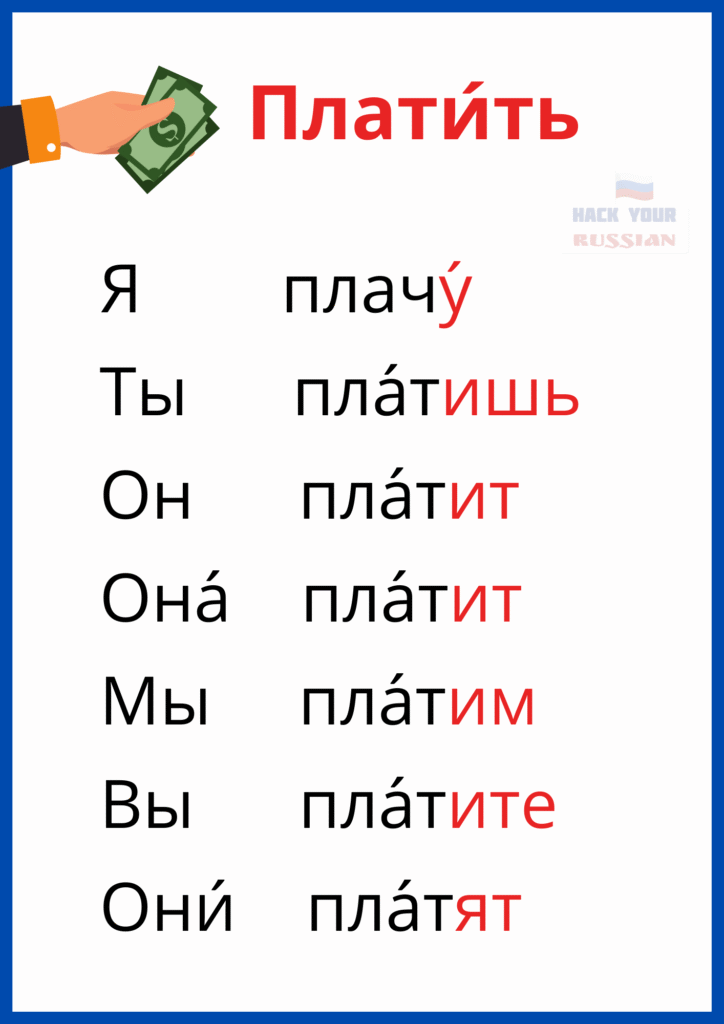
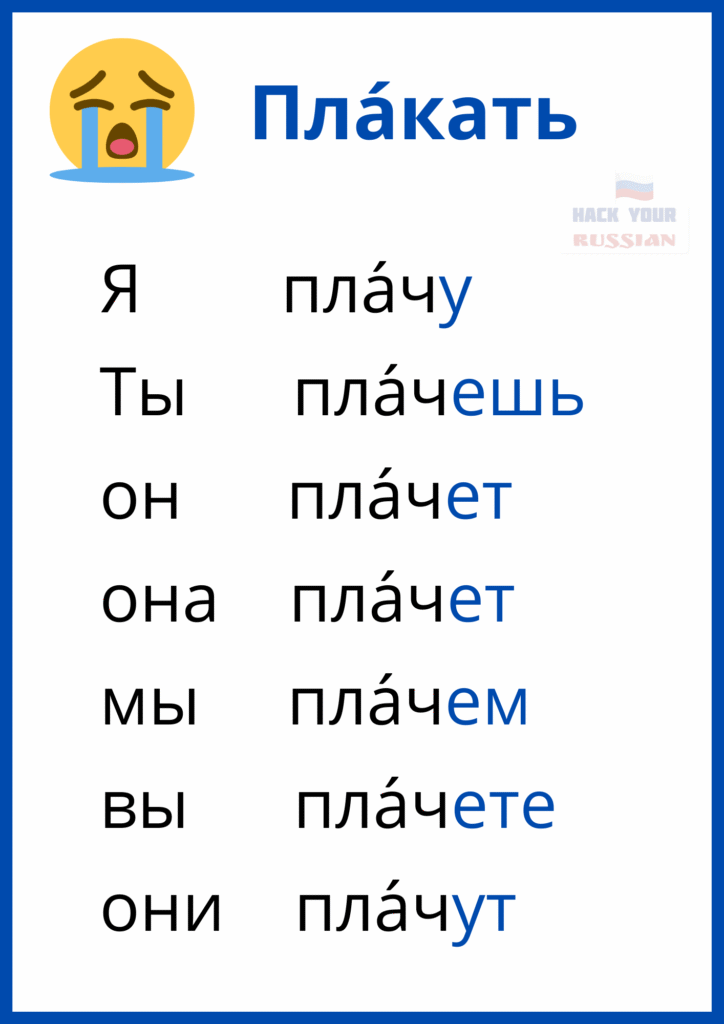
Here are some examples of Russian homographs shown in the video. The first Russian word is ‘плачу’ where the stress is the key.
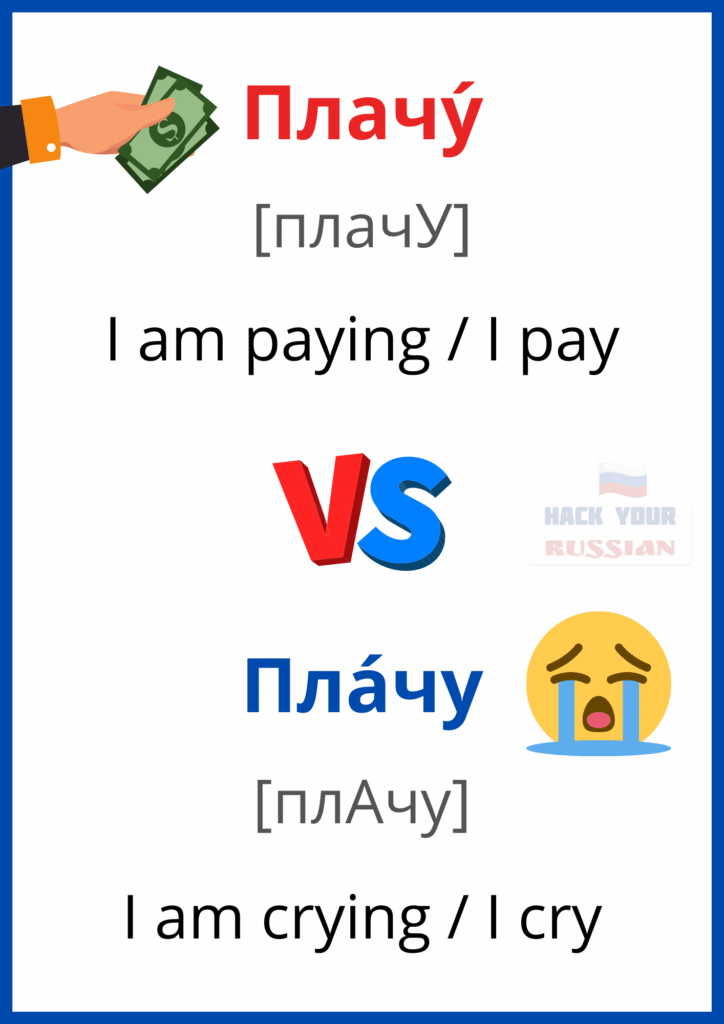
In fact, there is only one form with a pronoun ‘Я’ when these two Russian verbs coincide.
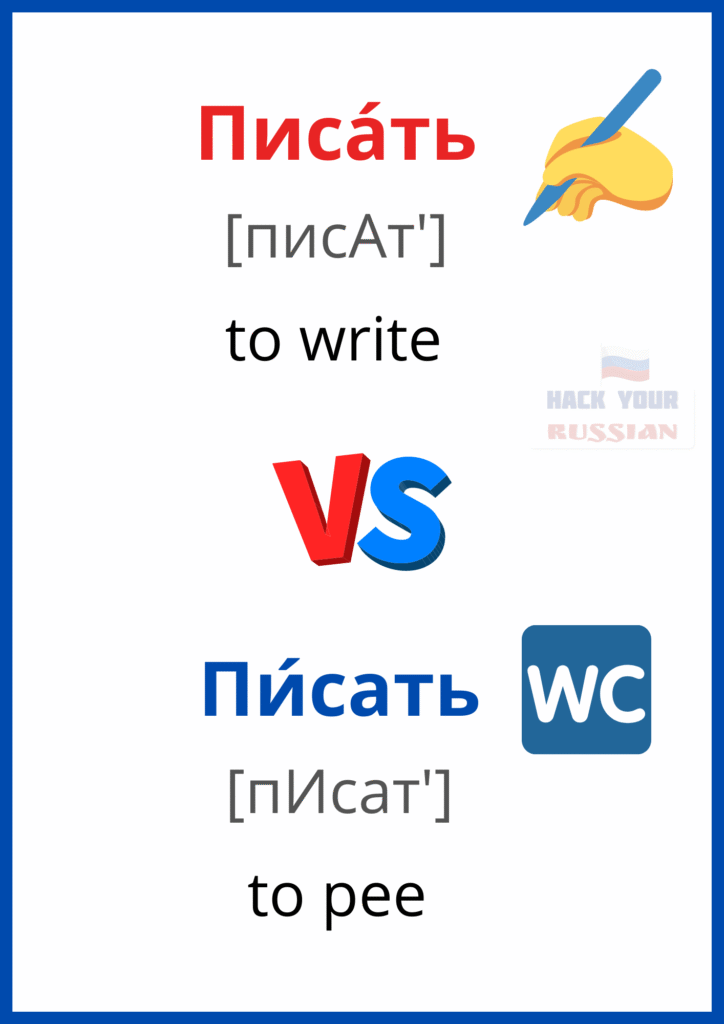
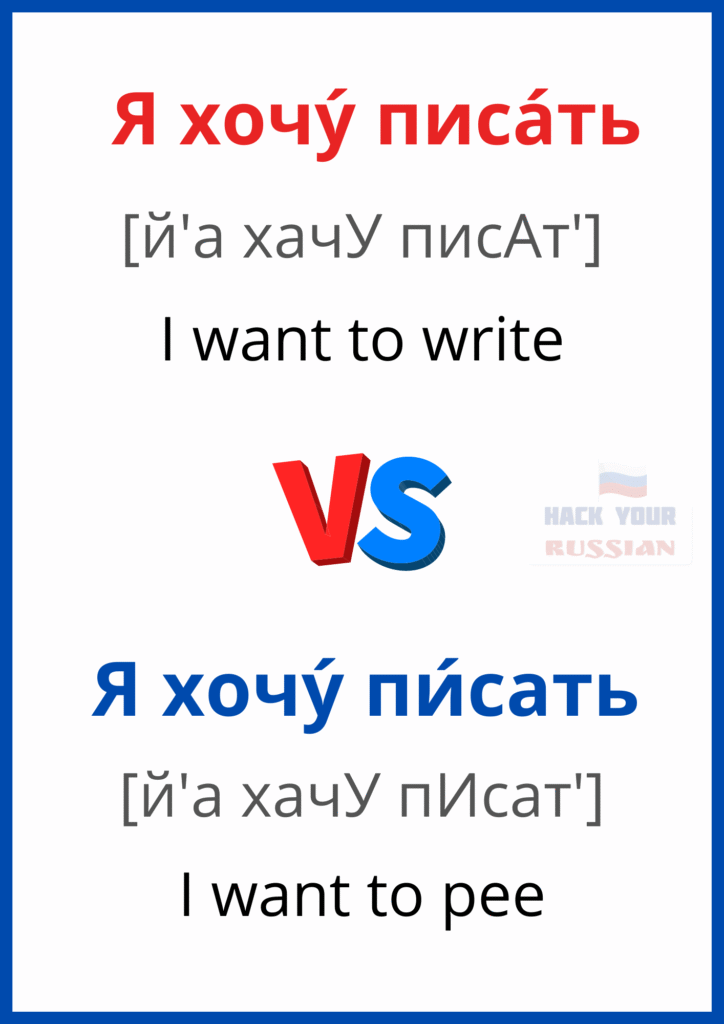
The second Russian verb that you should know and never confuse is the infinitive form ‘писать’. As you can imagine, the stress in this word is extremely important.
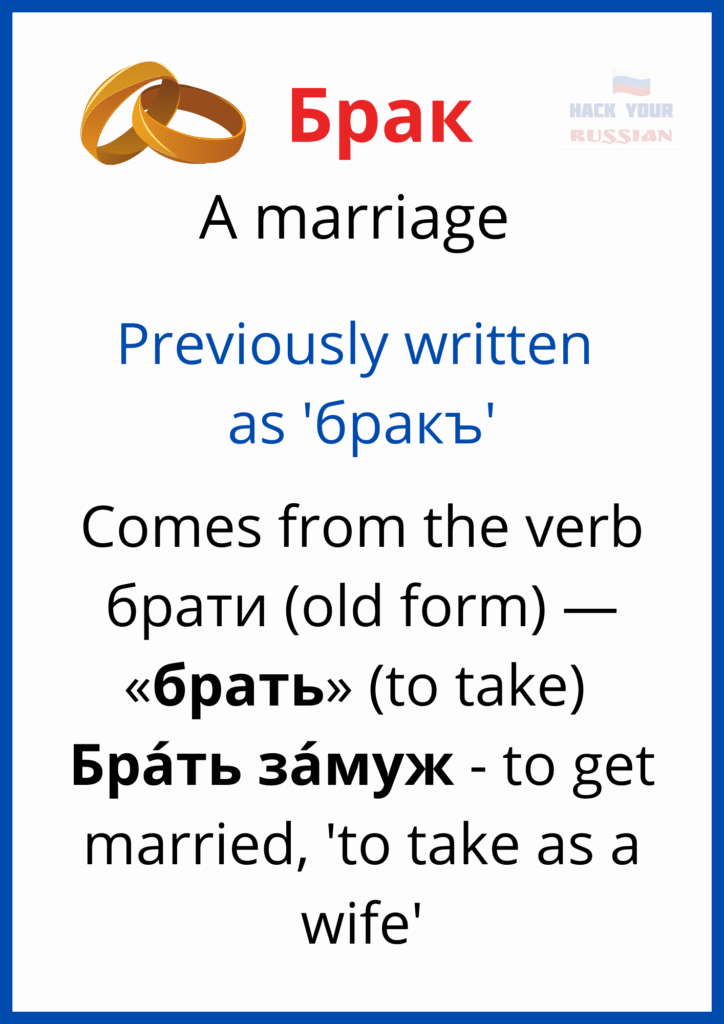
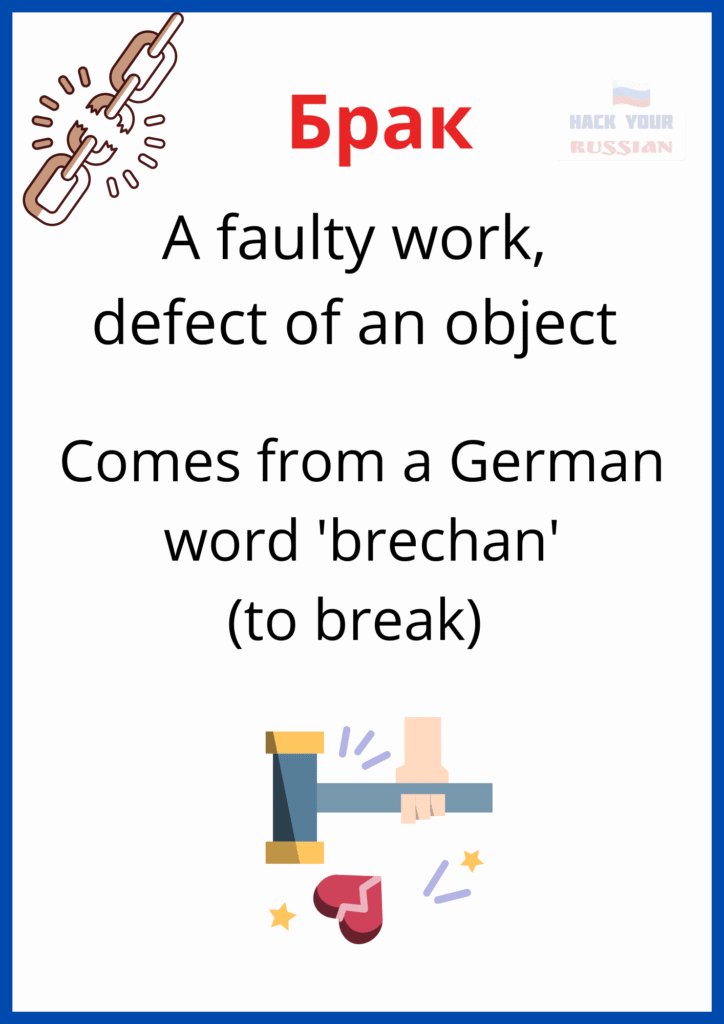
The next Russian homograph is the word ‘брак’ which can have two possible meanings.
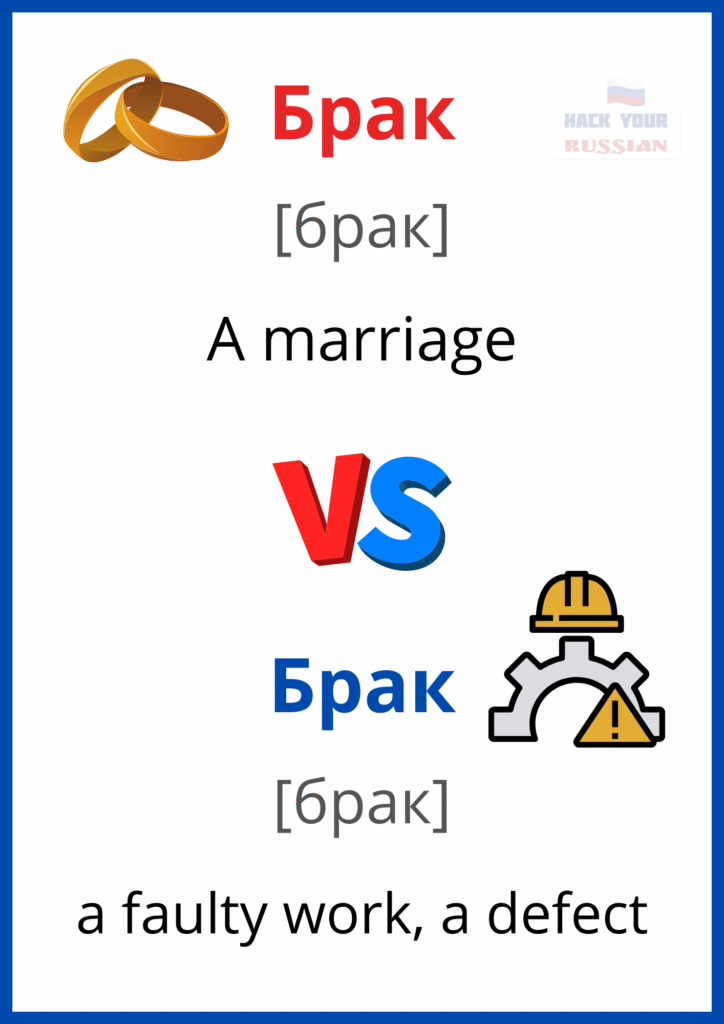
Even though these words are written the same, they have completely different origins.
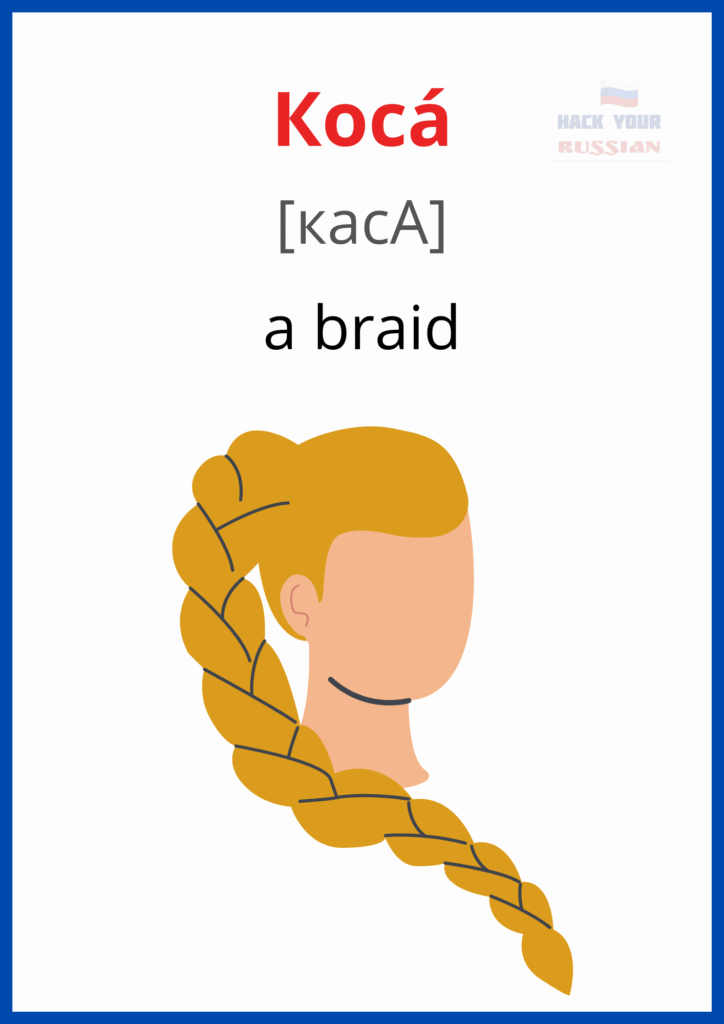
Another interesting Russian homograph is the noun ‘коса’ that has several meanings:
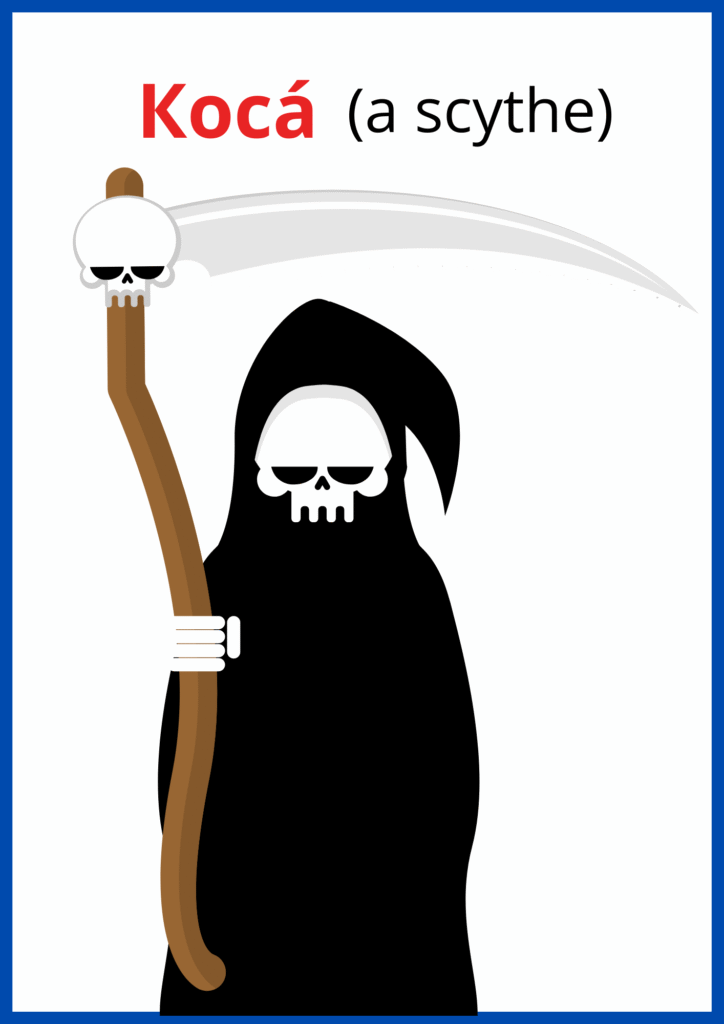
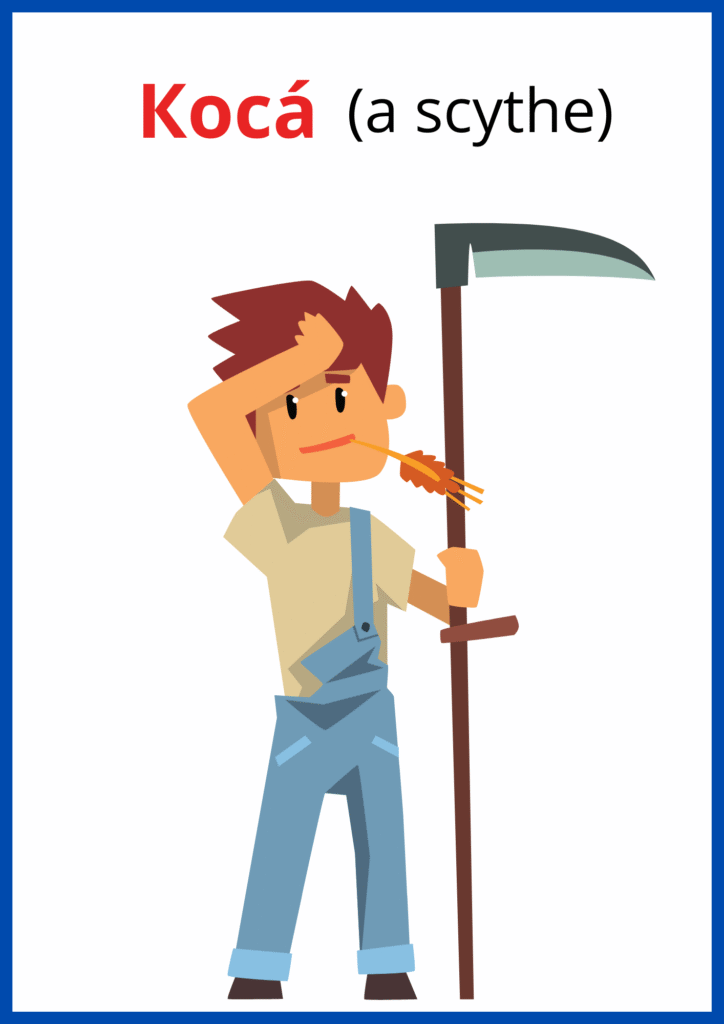
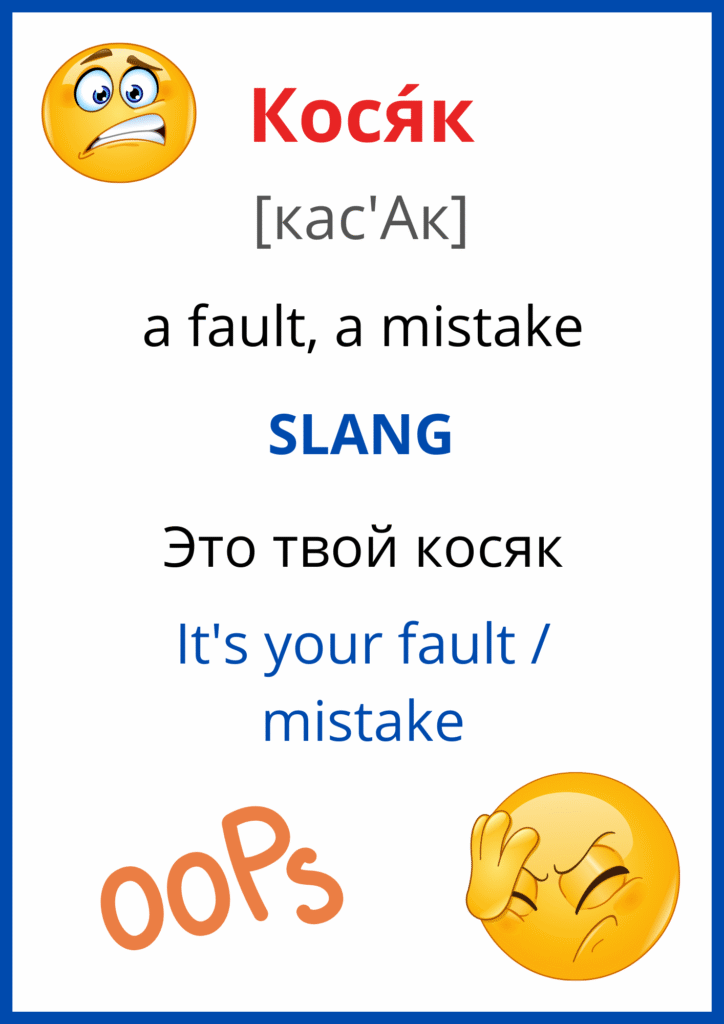
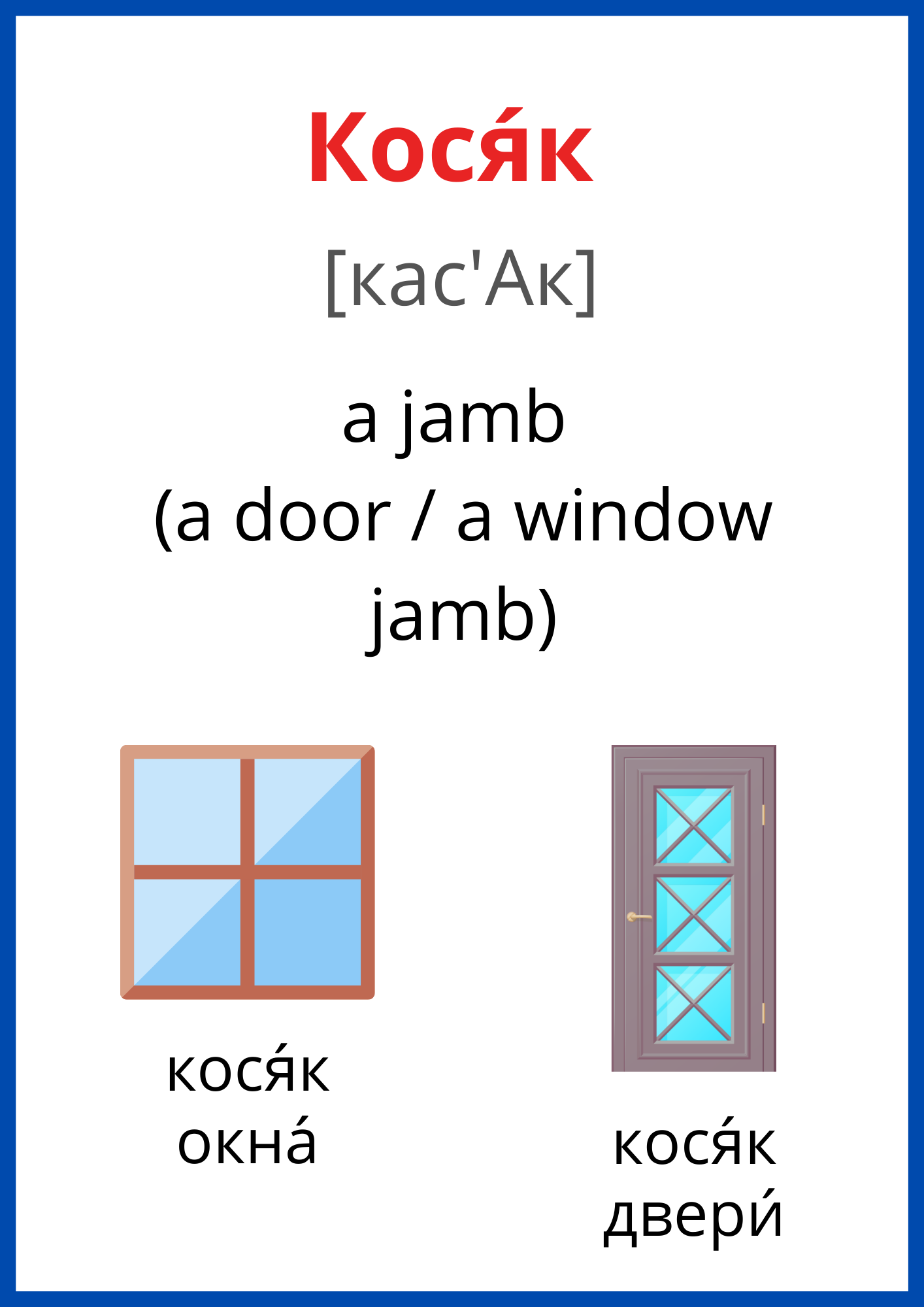
The next Russian homograph that sounds similar to the previous word is ‘косяк’.
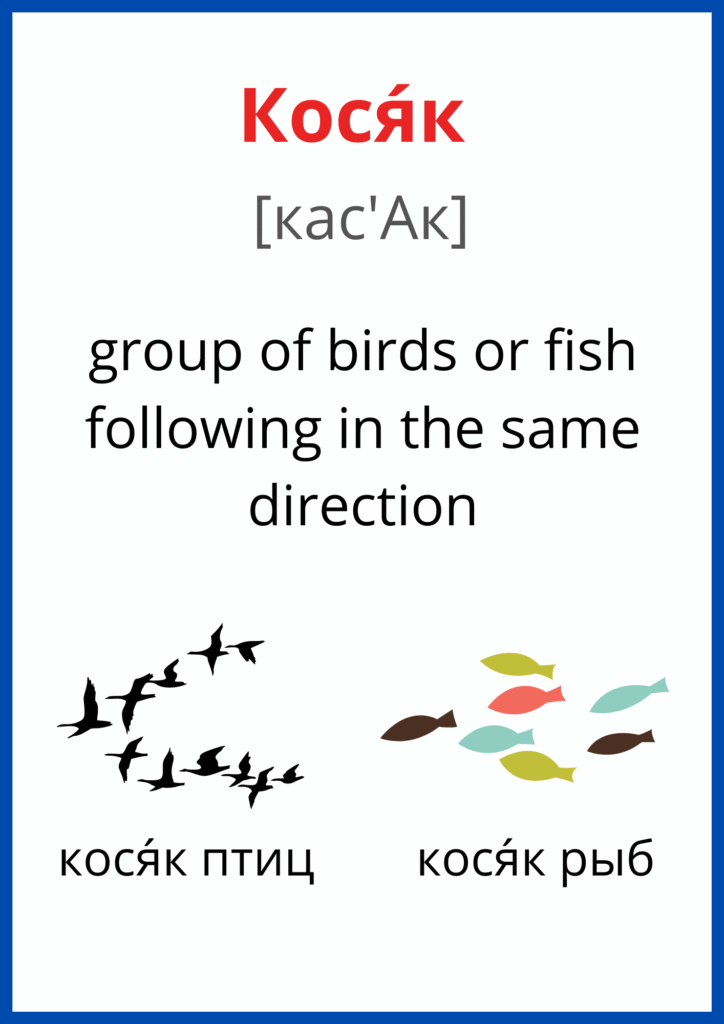
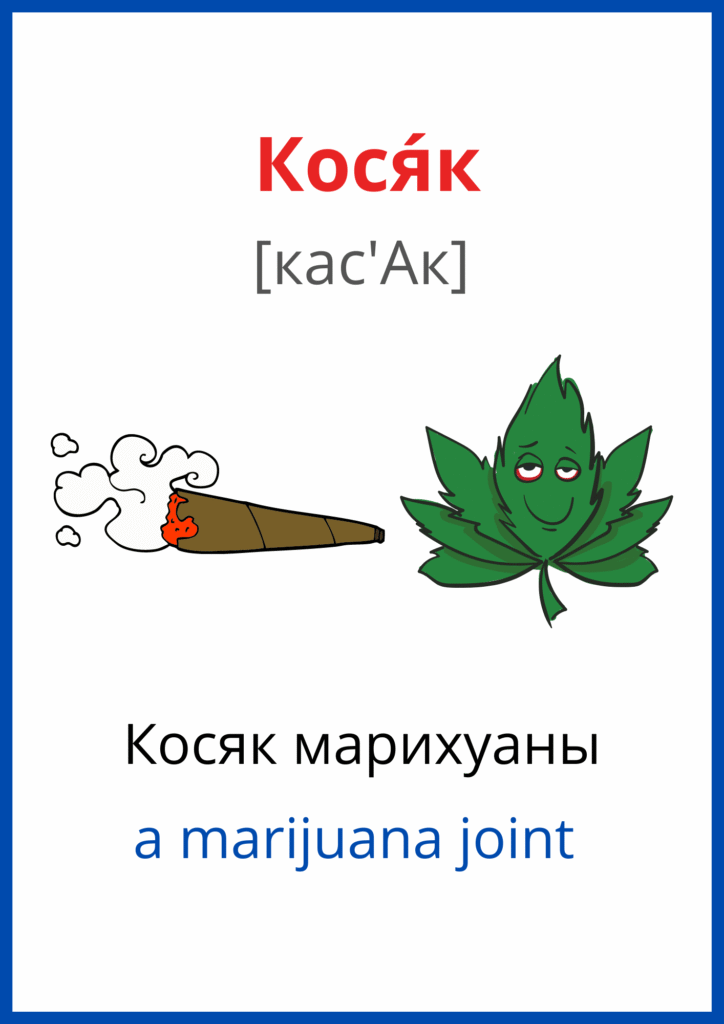
More Examples of Russian Homographs
Here are a few more Russian homographs that learners often find confusing:
| Russian word | Meaning 1 | Meaning 2 | What changes? |
|---|---|---|---|
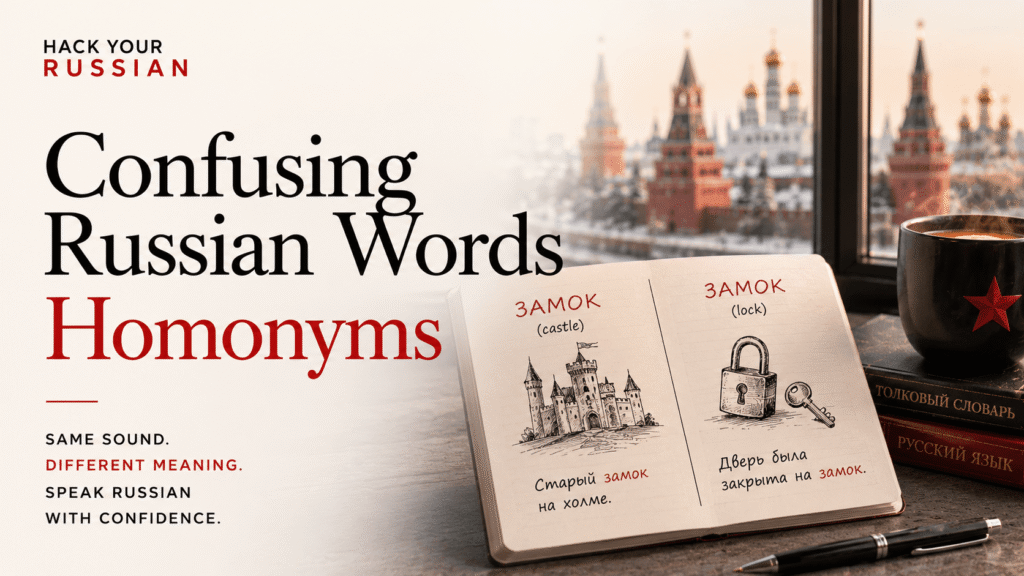
| за́мок / замо́к | castle | lock | stress |
| му́ка / мука́ | flour | suffering, torment | stress |
| а́тлас / атла́с | atlas | satin | stress |
| о́рган / орга́н | organ of the body / institution | musical organ | stress |
| хло́пок / хлопо́к | cotton | clap, pop | stress |
These words are very common in Russian, so it is useful to learn them as pairs. When you memorize them, always pay attention to the stress and try to create your own example sentence for each meaning.
For example:
за́мок means “castle”:
Мы посетили старый за́мок.
We visited an old castle.
замо́к means “lock”:
Я не могу открыть замо́к.
I can’t open the lock.
The spelling is identical, but the pronunciation and meaning are different. If pronunciation is still difficult for you, you can also check my Russian pronunciation course, where I explain how Russian sounds actually work in real speech.
If you found Russian homographs confusing, then you will be really surprised to learn Russian homoforms as these are words that represent different parts of speech.
What Are Russian Homoforms?
Russian homoforms are words that coincide only in certain grammatical forms. This means that two different words may look or sound the same in one form, but they are not the same word.
This happens very often in Russian because Russian has cases, verb conjugations, gender forms, plural forms, short adjectives, and many endings. As a result, different words can accidentally meet in the same form. If Russian endings confuse you, start with my full guide to the Russian Genitive case, because cases are one of the main reasons Russian words change their form.
For learners, homoforms are difficult because they are not always listed as “separate vocabulary words”. You may already know both words, but still feel confused when they appear in a sentence.
The best way to understand homoforms is to ask yourself three questions:
- What part of speech is this word here?
- What is the full sentence about?
- Which grammatical form is being used?
Very often, the answer becomes clear from context.
Russian homoforms
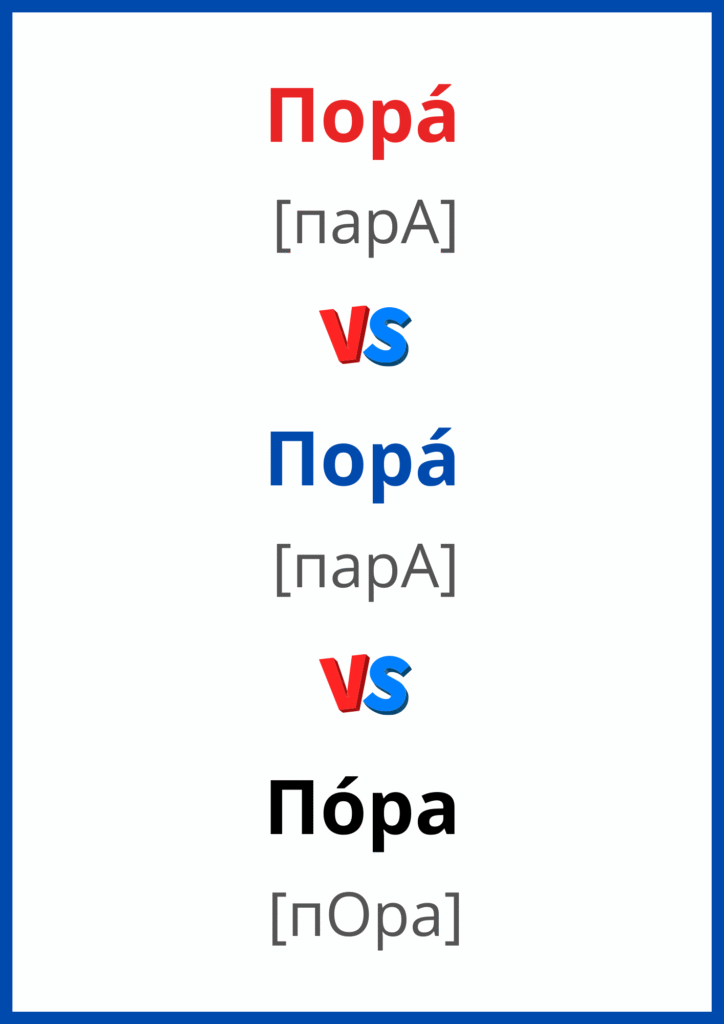
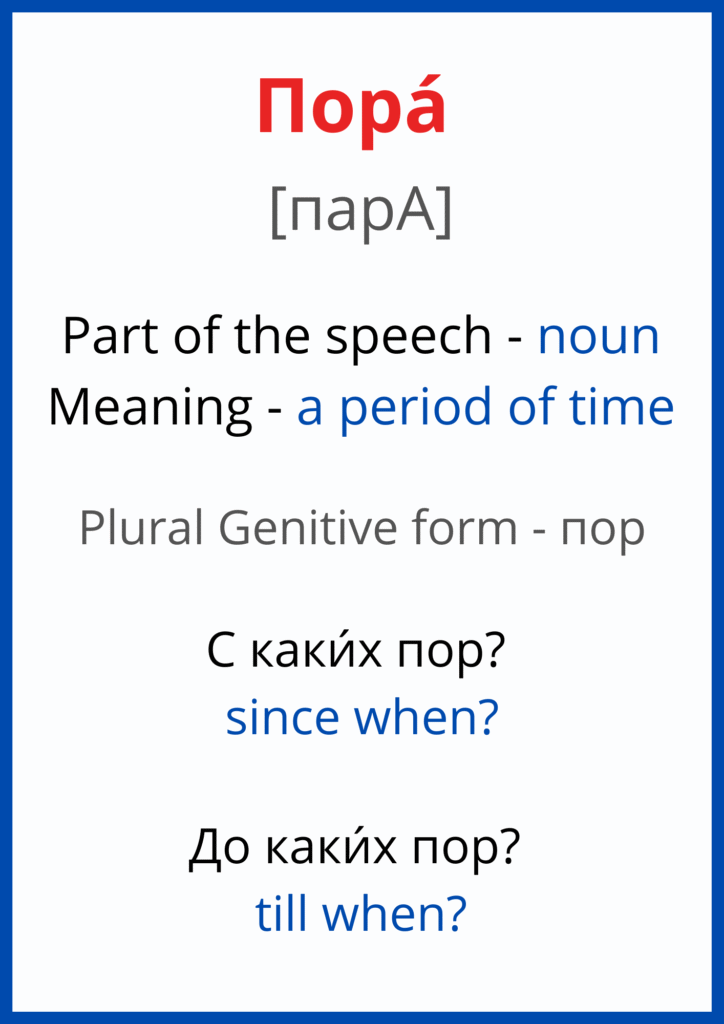
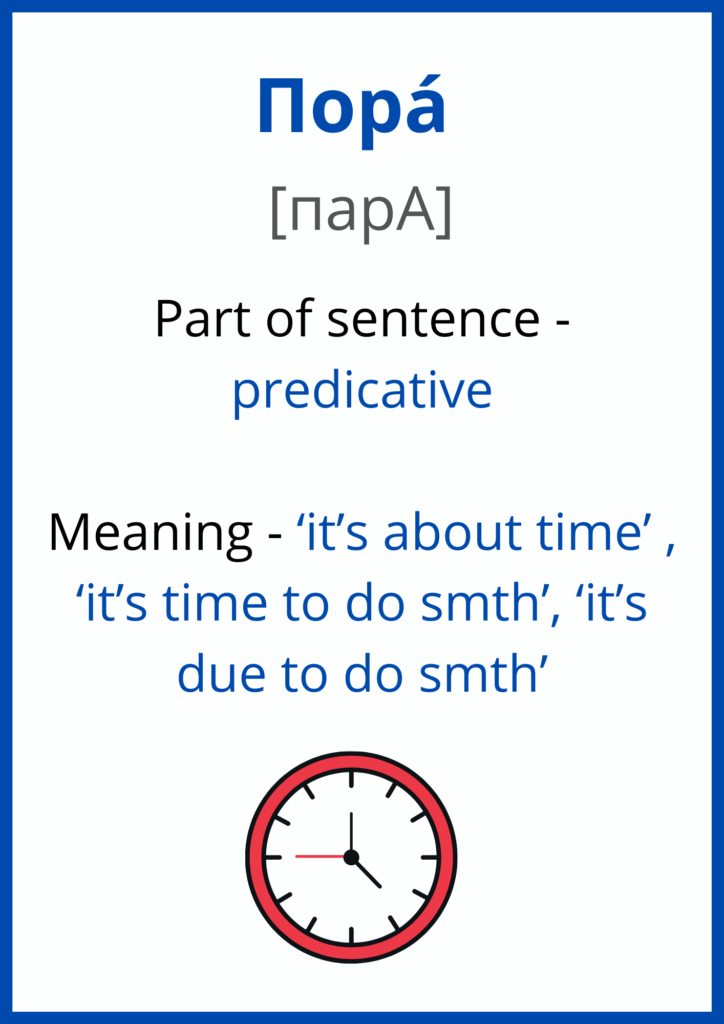
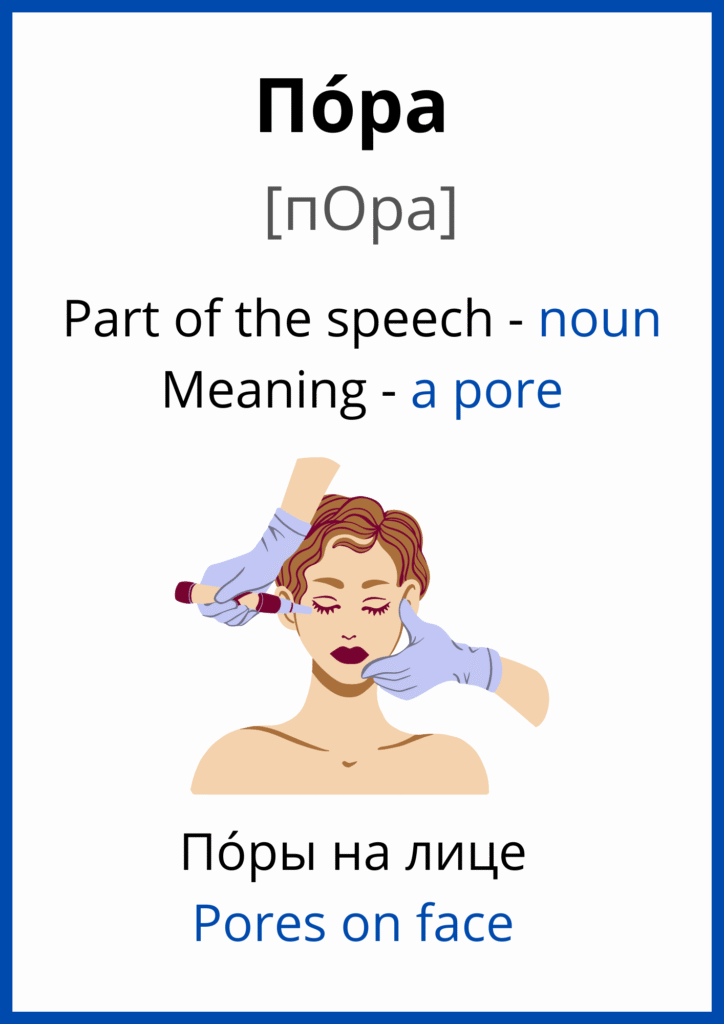
The first Russian homoform is ‘пора’
Here are several meanings of the Russian homoform ‘пора’
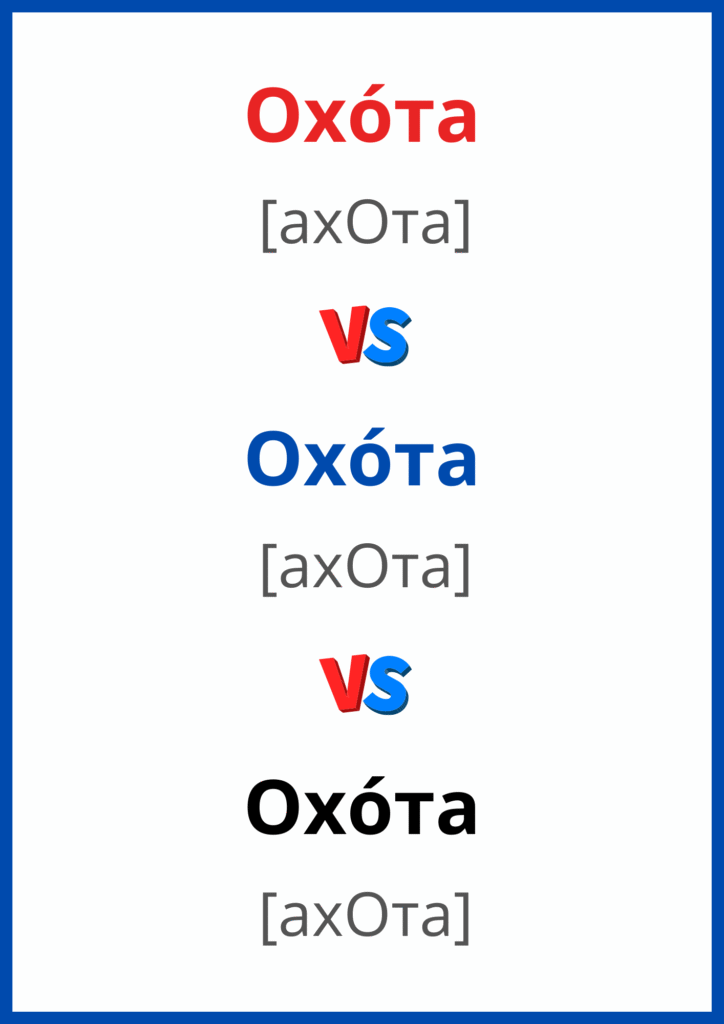
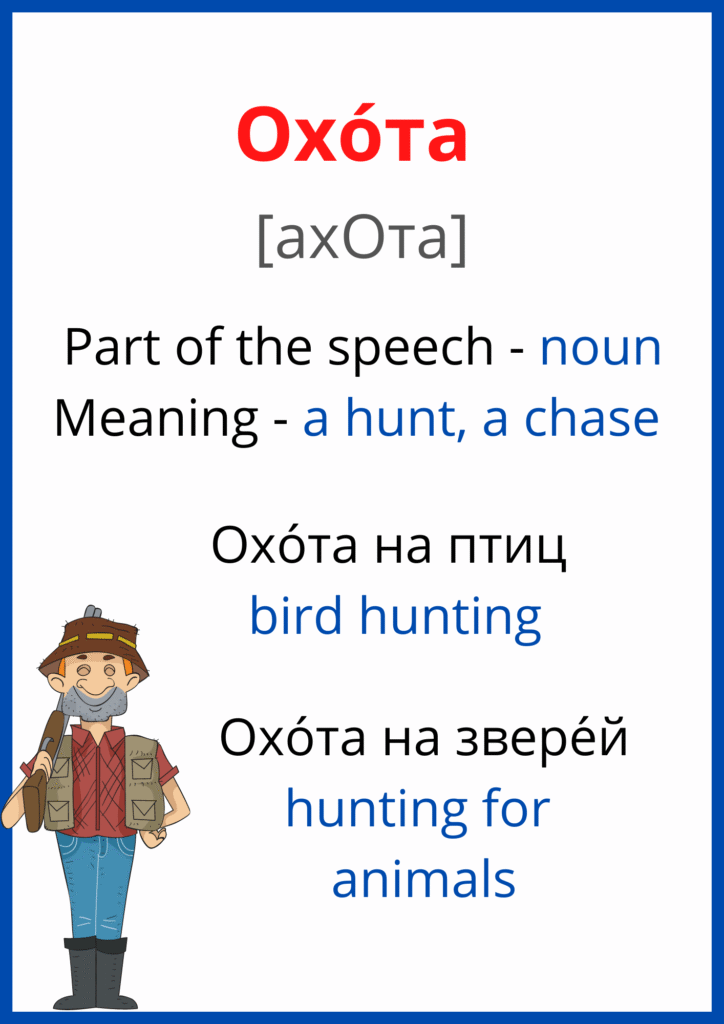
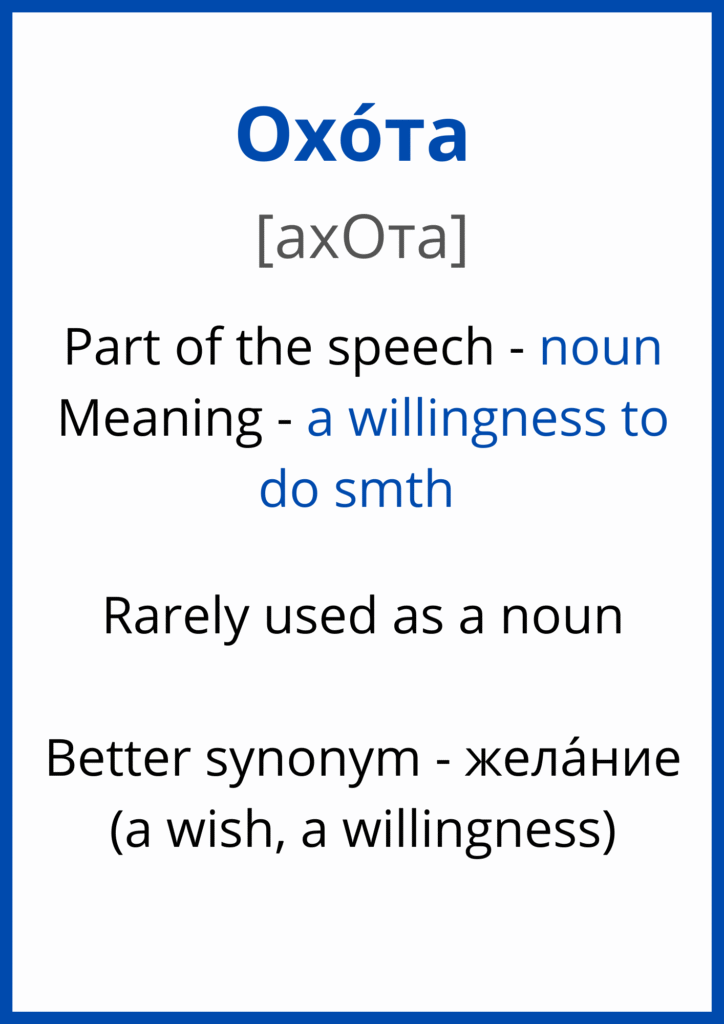
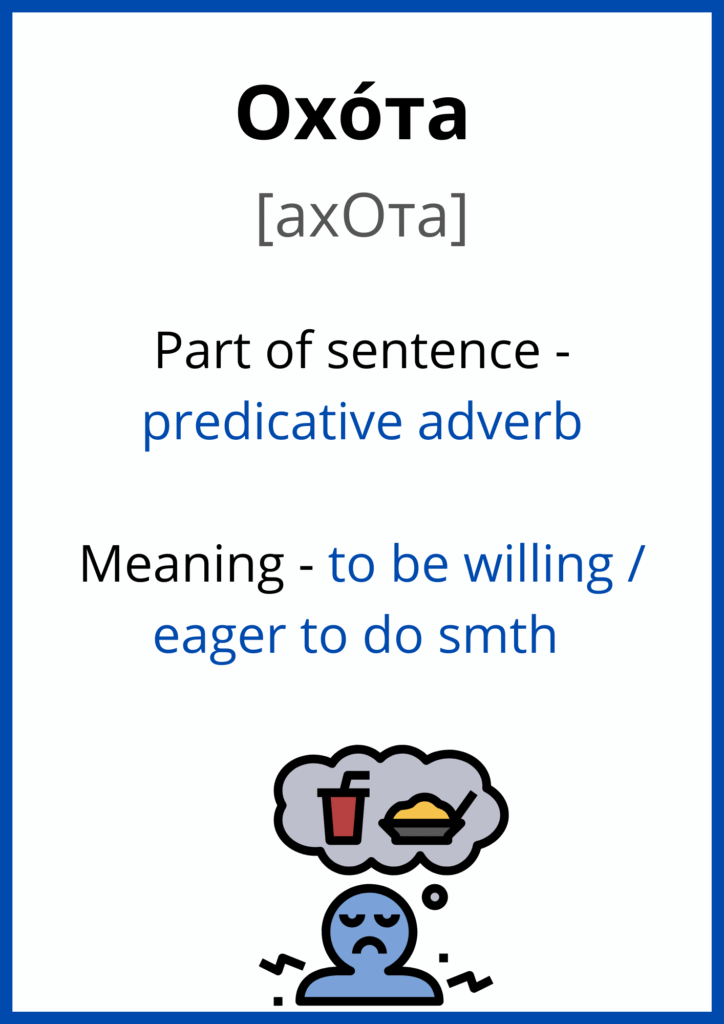
Here is the next Russian homoform – ‘охота’
Here are several meanings of the Russian homoform ‘охота’
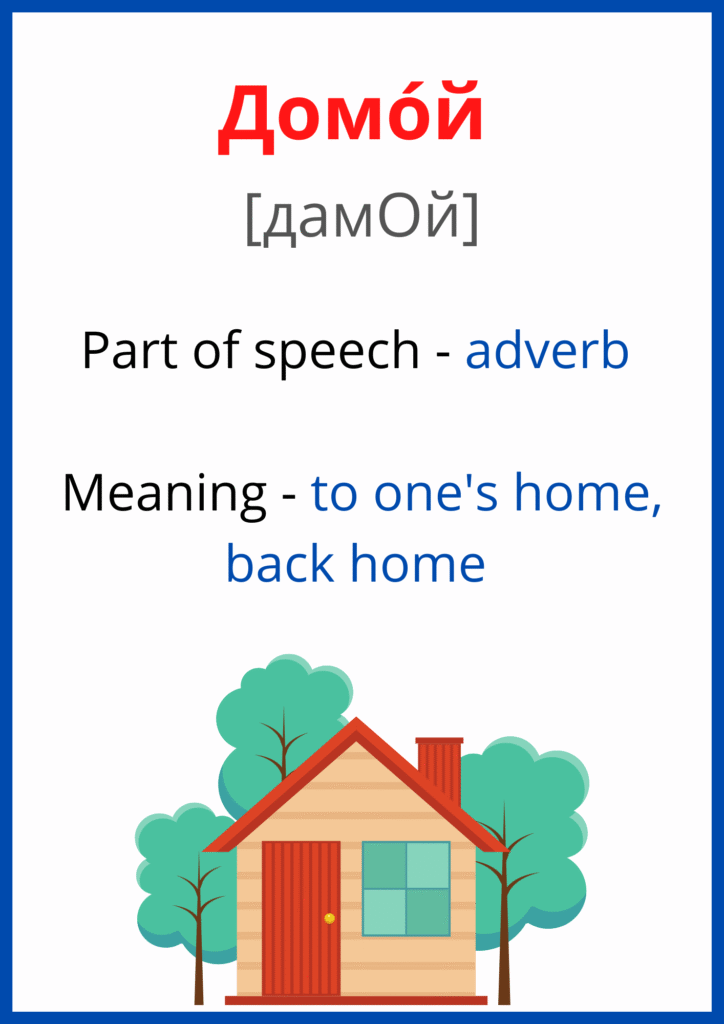
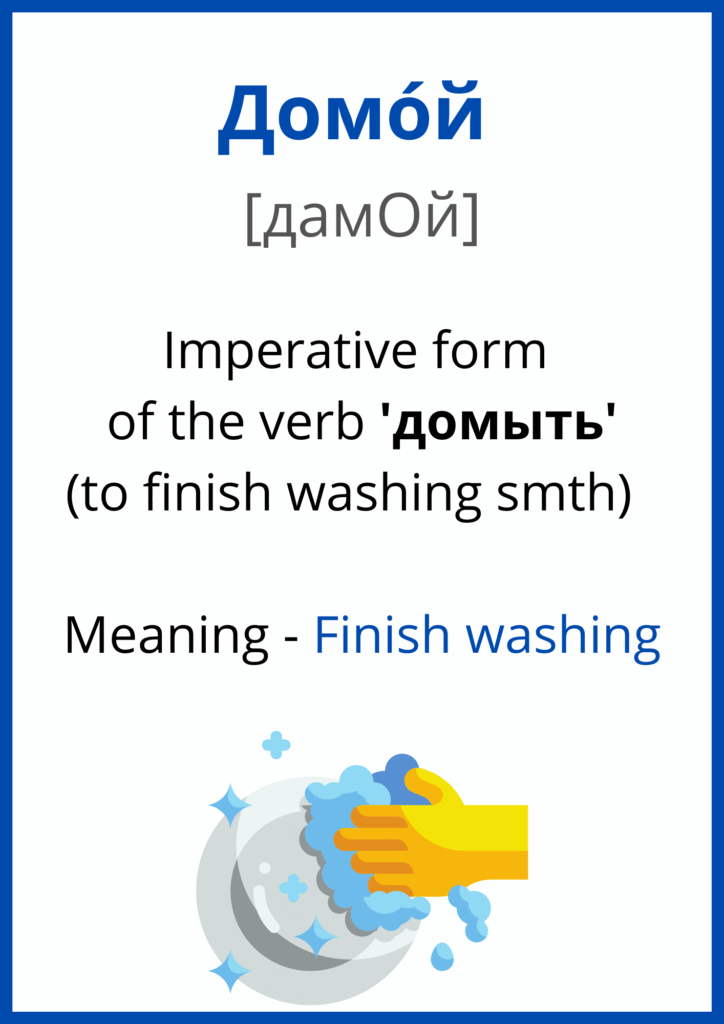
Another interesting Russian homoform – ‘домой’
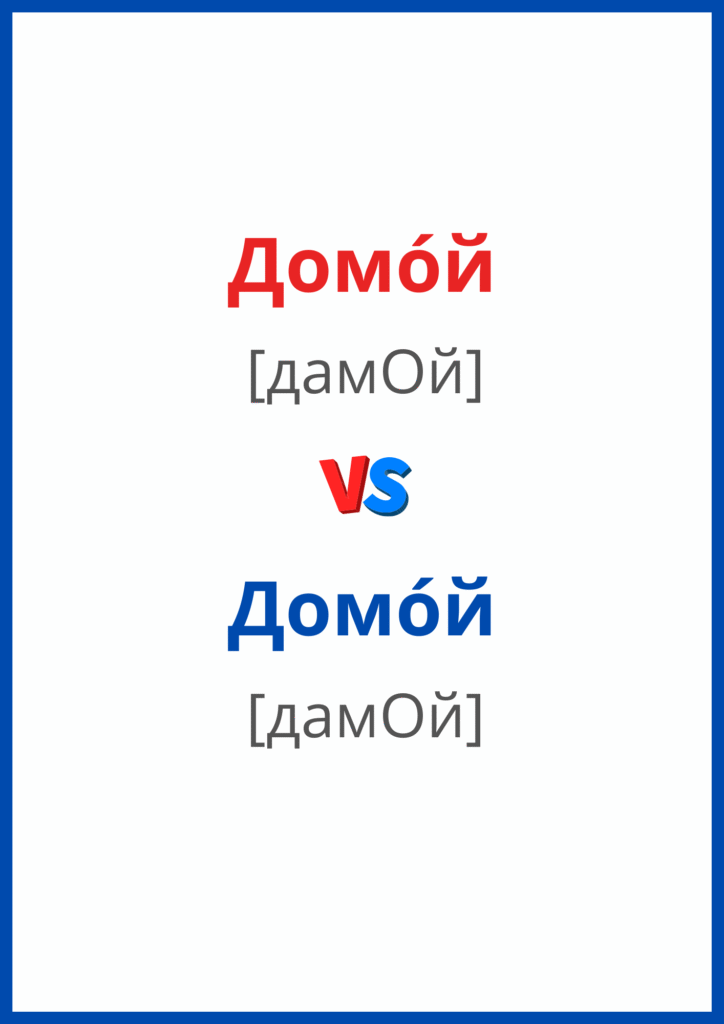
Here are several meanings of the Russian homoform ‘домой’
More Examples of Russian Homoforms
| Russian word | Possible meaning 1 | Possible meaning 2 | Example |
|---|---|---|---|
| мой | my | wash! / wash, as an imperative form | Это мой дом. / Мой руки! |
| стали | became | steel | Они стали друзьями. / Это сделано из стали. |
| лечу | I am flying | I am treating / healing | Я лечу в Москву. / Я лечу пациента. |
| пила | saw, the tool | drank, feminine past tense | Это старая пила. / Она пила чай. |
Some of these examples are more common than others, but they show the main idea: the same form can belong to different words. This is why context is everything in Russian.
That’s it, we have learned the most common Russian homonyms: homographs and homoforms. Of course, there are more Russian homonyms that I have shown in the video lessons, but you cannot learn them all at once.
To understand Russian word forms more deeply, you can also explore my Russian grammar books, where I explain Russian cases through stories, context and exercises.
How to Stop Confusing Russian Homonyms
If Russian homonyms feel overwhelming, do not try to memorize long lists without context. It is much more effective to learn them through short phrases and real examples.
Here are a few practical tips:
1. Learn words with stress marks.
When you write new vocabulary in your notebook, mark the stressed syllable. This is especially important for homographs like за́мок and замо́к.
2. Always learn the full phrase, not only the word.
Instead of memorizing just мука, learn two examples:
пшеничная мука́ — wheat flour
сильная му́ка — strong suffering
This is also why learning basic Russian phrases for beginners is often more useful than memorizing isolated words.
3. Pay attention to grammar.
If a word looks confusing, ask yourself: is it a noun, a verb, an adjective, or an adverb? The grammar often tells you the meaning.
4. Use context before translating.
Do not translate the word immediately. Read the whole sentence first. Very often, the meaning becomes obvious.
5. Listen to native pronunciation.
For words where stress changes the meaning, listening is essential. Reading alone is not enough.
On the positive side, there are also many Russian-English similar words that can help you expand your vocabulary faster.
If you enjoy this topic, you may also like my lesson on Russian words with several meanings.
Want to keep learning Russian in context? Explore my Russian learning resources with free lessons, books, videos and practical study materials.
If you have recently started to learn Russian language, you should absolutely have my free guide ‘Essential Russian Words and Expressions to Understand Spoken Russian’.
It’s also very important to know how to pronounce Russian words correctly as not every Russian letter is pronounced the same way as it’s written. There are certain Russian pronunciation rules that are really easy to learn.
If you wish to speak Russian, you should absolutely learn how to use Russian cases. Check the most comprehensive guides to Russian cases:

Why You Should Learn Confusing Russian Words
Learning confusing Russian words will help you understand real spoken Russian much better. Native speakers use homonyms naturally, and they usually do not slow down to explain them. You will hear these words in everyday conversations, Russian movies, YouTube videos, podcasts, songs, and books. The same is true for Russian slang words, which are often impossible to understand if you only learn textbook Russian.
Russian homonyms are also important if you want to improve your reading skills. When you read in Russian, stress marks are usually not shown, so you need to understand the meaning from the sentence. The more examples you know, the easier it becomes.
If you are a beginner, focus on the most common pairs first. If you are an intermediate learner, start collecting confusing words from real materials: videos, dialogues, short stories, and conversations with native speakers.
FAQ
Are Russian homonyms difficult to learn?
Russian homonyms can be confusing at first, but they become much easier when you learn them in context. The most important thing is not to memorize isolated words. Learn short phrases, example sentences, and pronunciation with stress.
Why do some Russian words have the same spelling but different meanings?
Some Russian words developed from different origins but ended up having the same spelling. In other cases, grammar creates forms that look or sound the same. This is why context is so important in Russian.
How can I know where the stress is in Russian words?
In normal Russian texts, stress is usually not marked. You can check a dictionary, listen to native pronunciation, or learn words from materials that include stress marks. When you are a learner, it is a good idea to write stress marks in your notes.
What is the difference between Russian homonyms and words with several meanings?
Homonyms are usually considered separate words that look or sound the same but have different meanings. A word with several meanings is one word that developed multiple related meanings. In practice, both can be confusing for learners, so it is useful to study them together.
Should beginners learn Russian homonyms?
Yes, but beginners should start only with the most common examples. You do not need to memorize long lists. Start with words given in this article.