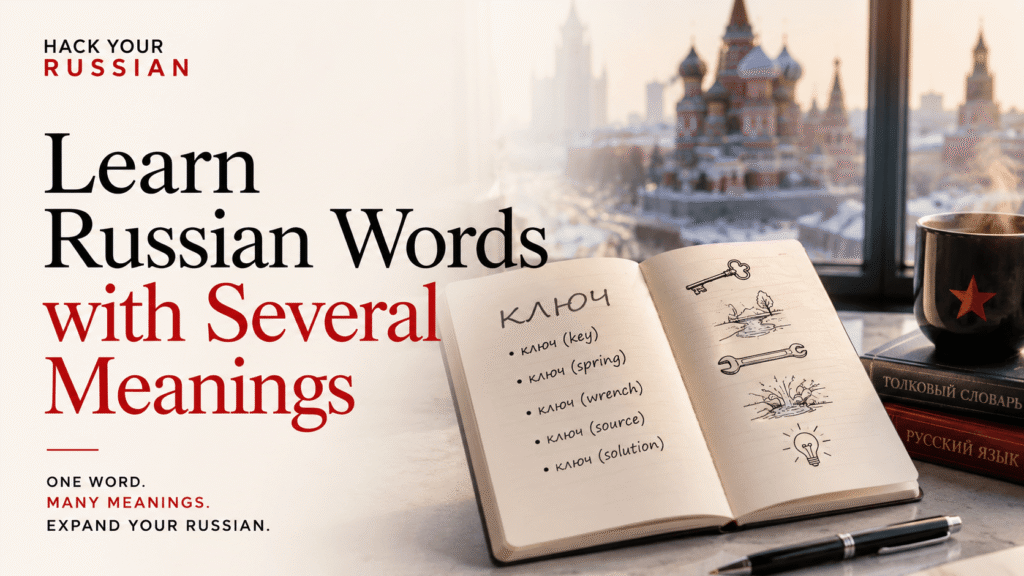
If you are learning Russian, you might have noticed that sometimes a familiar word pops up in a completely unexpected context. Russian vocabulary is notorious for its flexibility—one word can denote a physical object, a slang expression, or an everyday action depending entirely on how it is used. Words with several meanings are one of the reasons why real Russian speech can feel confusing at first. To train your ear for natural speech, you may also like my lesson on how to understand Russian speakers at native speed. This article will break down some of the most confusing multi-meaning Russian words so you can sound like a true native.
Table of Contents
Video Lesson “Russian words with several meanings”
The Versatile “Star” and “Pair”
Some of the most common nouns in Russian carry several meanings that extend far beyond their literal translations:
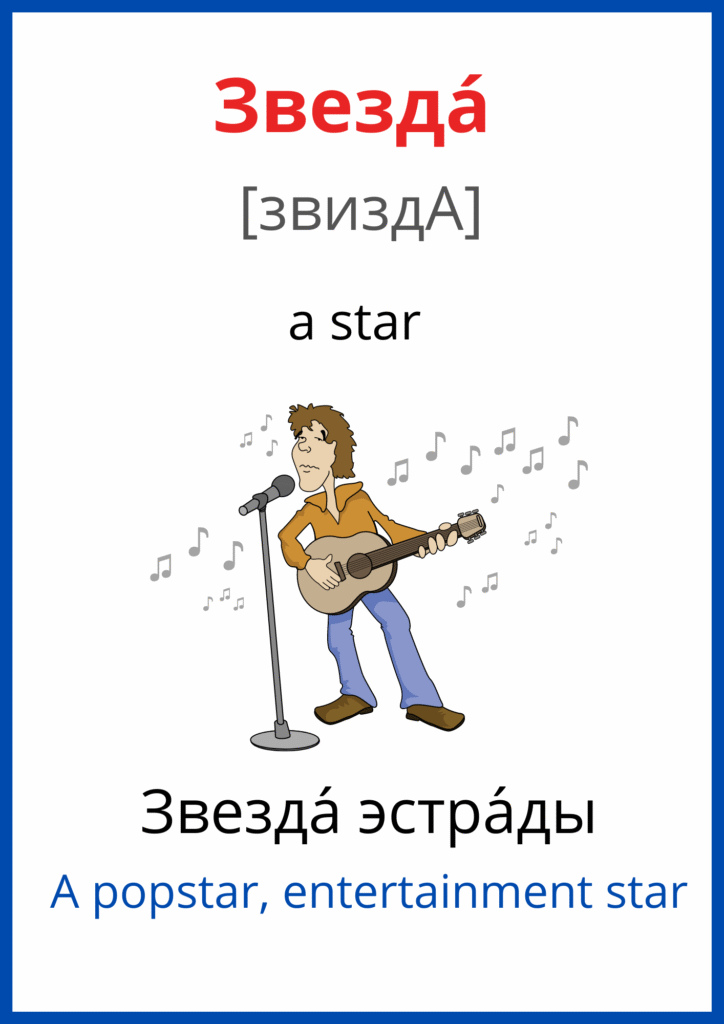
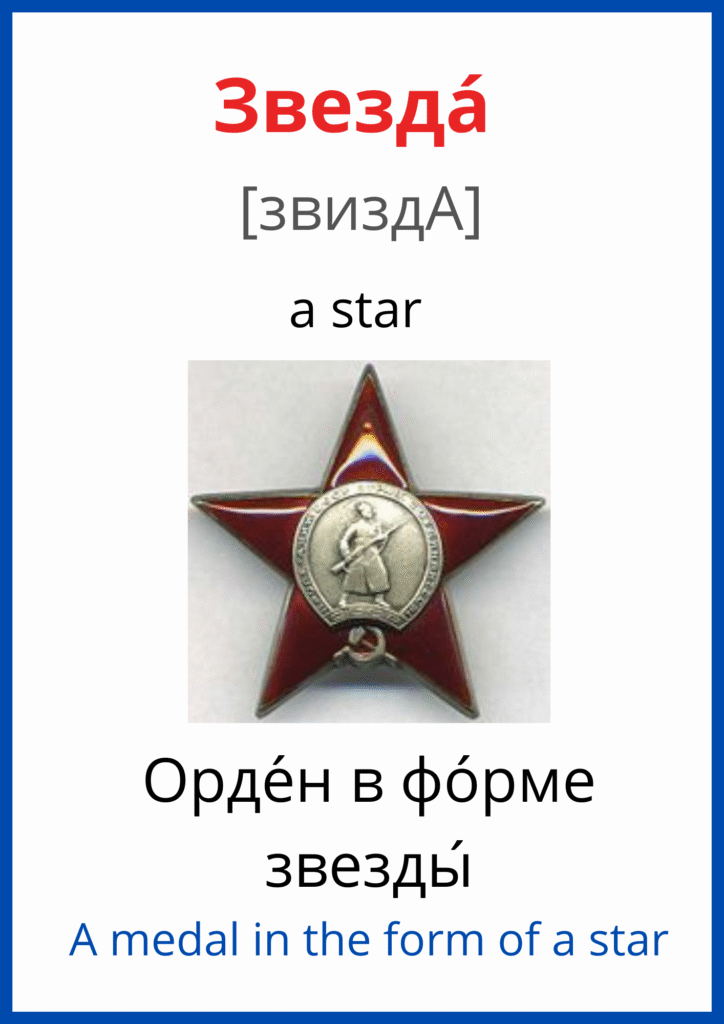
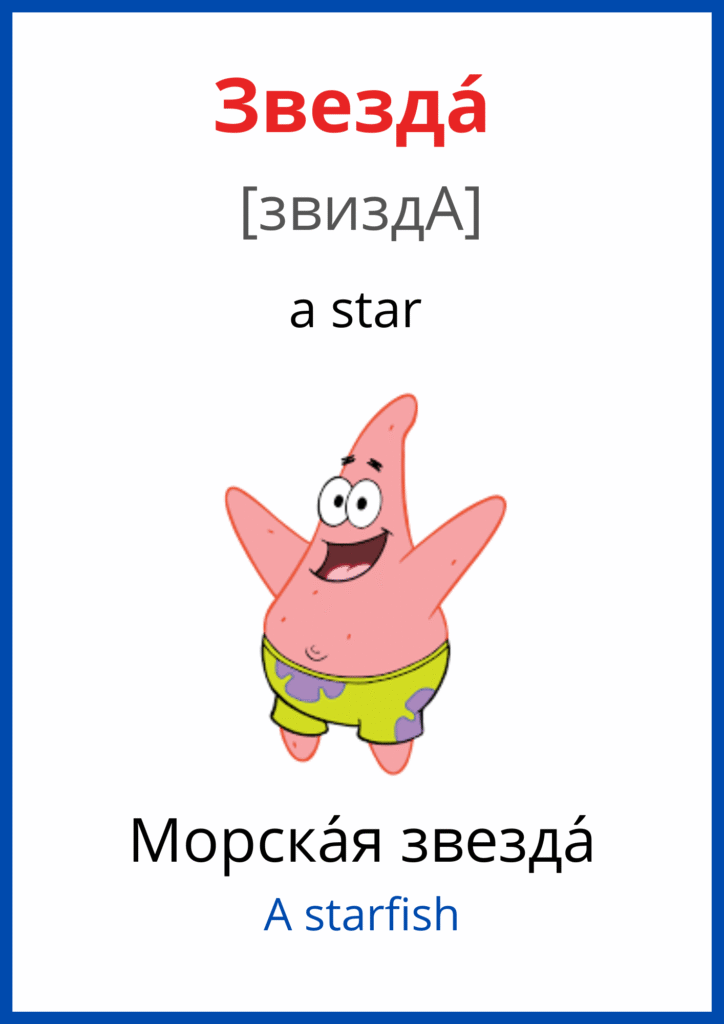
- Звезда (star): This word can refer to a star in the sky, a famous pop star (звезда эстрады), a military medal/order, or even a starfish (морская звезда).
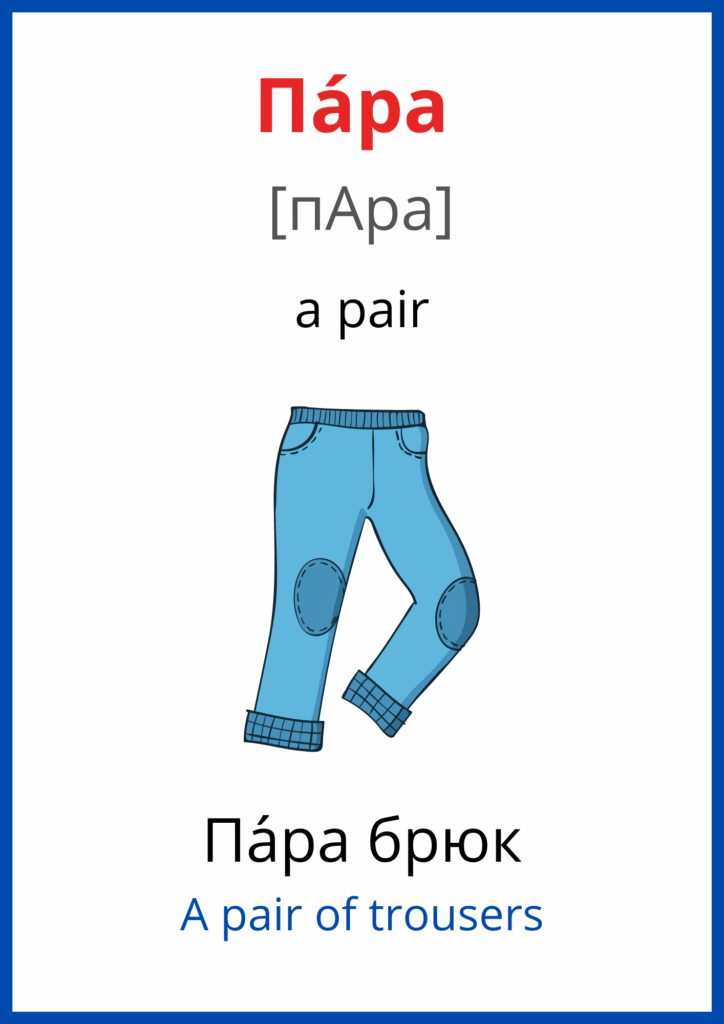
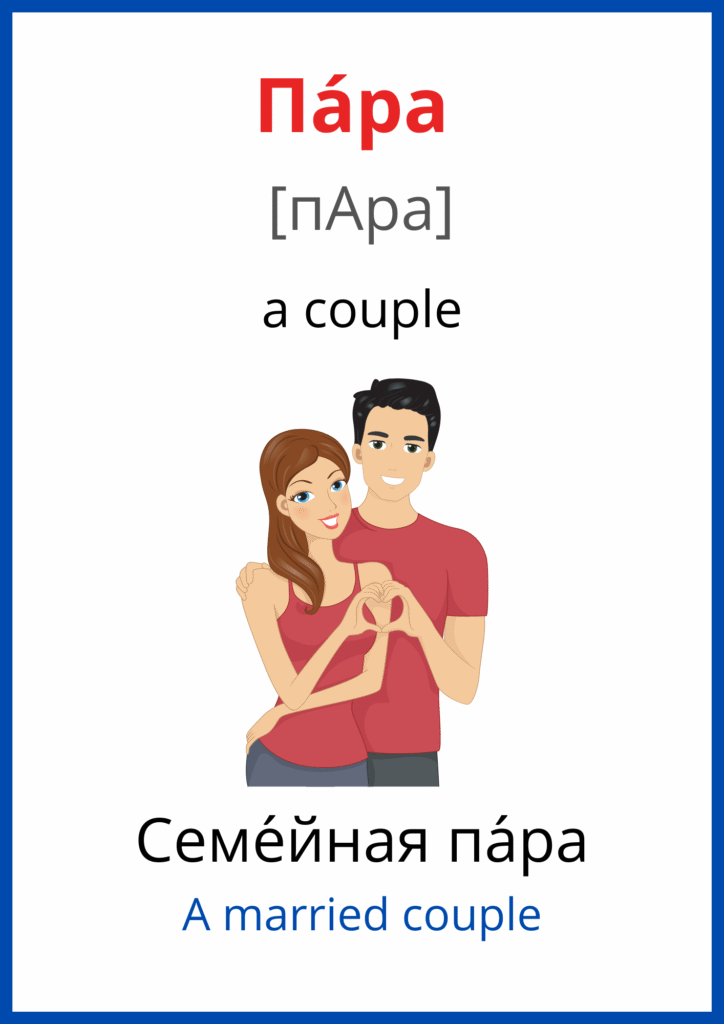
- Пара (pair/couple): You can use this to describe a romantic couple (семейная пара) or a pair of objects, like a pair of pants (пара брюк) or boots. However, Russians also frequently use it to simply mean “a few.” For example, you might ask to say пара слов (a few words), invite пару друзей (a few friends), or do something пару раз (a couple of times). If you are studying in Russia, there are a couple of specific terms you need to know to survive the academic environment:
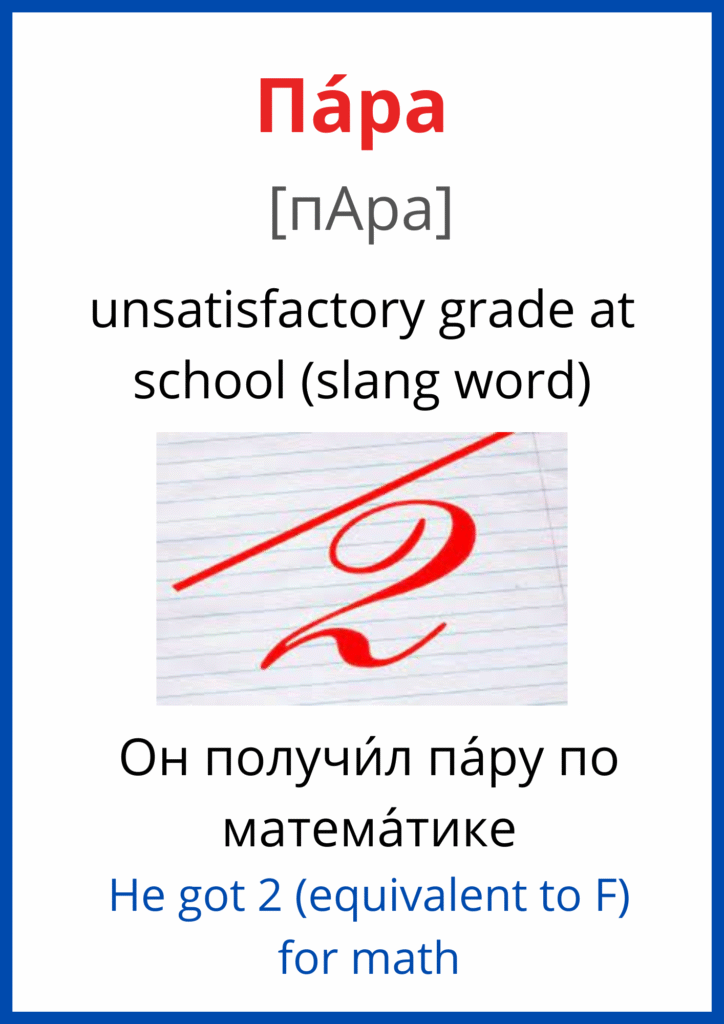
- Пара: In a university setting, a standard 90-minute class or lecture block is called a пара. Additionally, if you perform poorly, a bad grade (a “2” out of 5) is also colloquially called a пара (or двойка).
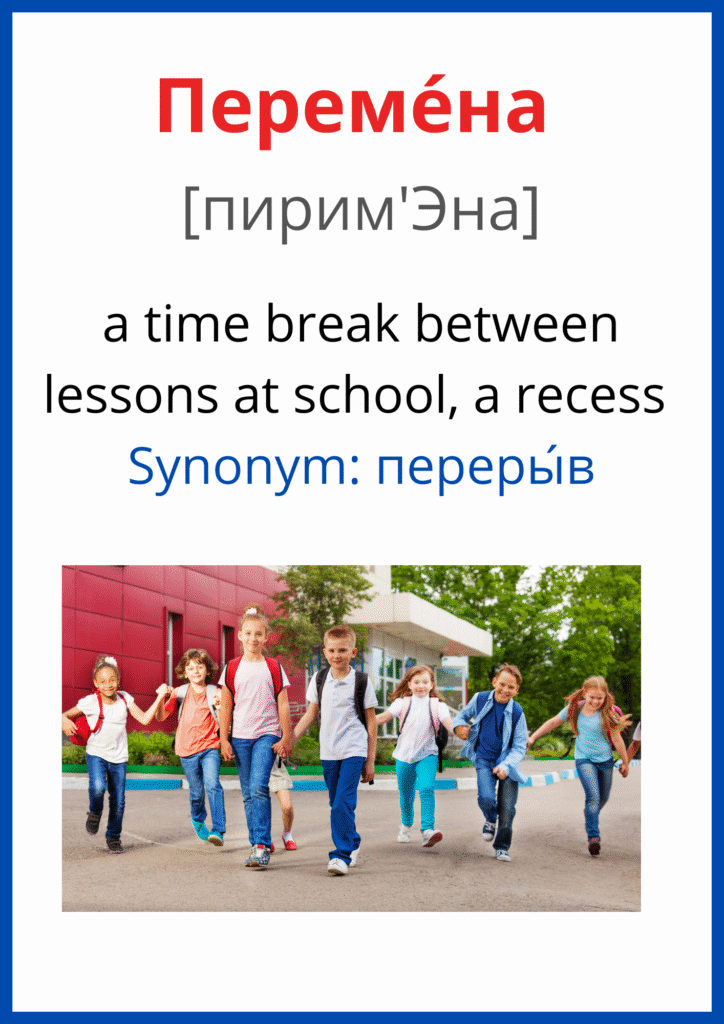
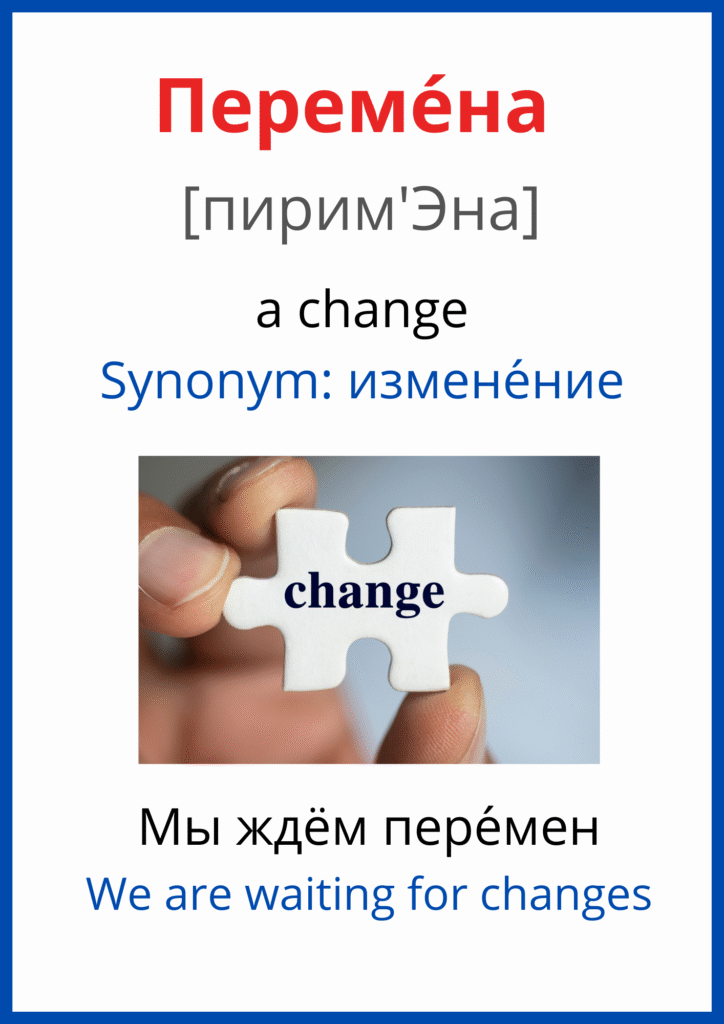
- Перемена: When you get a break between classes at school, it is called a перемена—a word that literally translates to “change”
The first Russian word with several meanings is ‘звезда’
The second Russian word with several meanings is ‘пара’
Another Russian word with several meanings is ‘перемена’
Stressing Out and Steaming
Physical actions in Russian often translate into emotional states in slang:
- Париться: Literally, this verb means to steam, like vegetables being cooked (овощи варятся и парятся) or a person sweating in a traditional banya. However, in modern slang, it means to worry or stress about something. You might hear someone say, “Она постоянно парится из-за работы” (She constantly worries about work). If your friend is stressed, you can comfort them by saying “Не парься” (Don’t worry / Don’t sweat it).
- Запариться: By adding a prefix, the meaning shifts to being completely exhausted, overworked, or fed up with a task. For instance: “Я запарился учить русский язык” (I am tired of/fed up with learning Russian)
Another Russian word with several meanings is ‘париться’
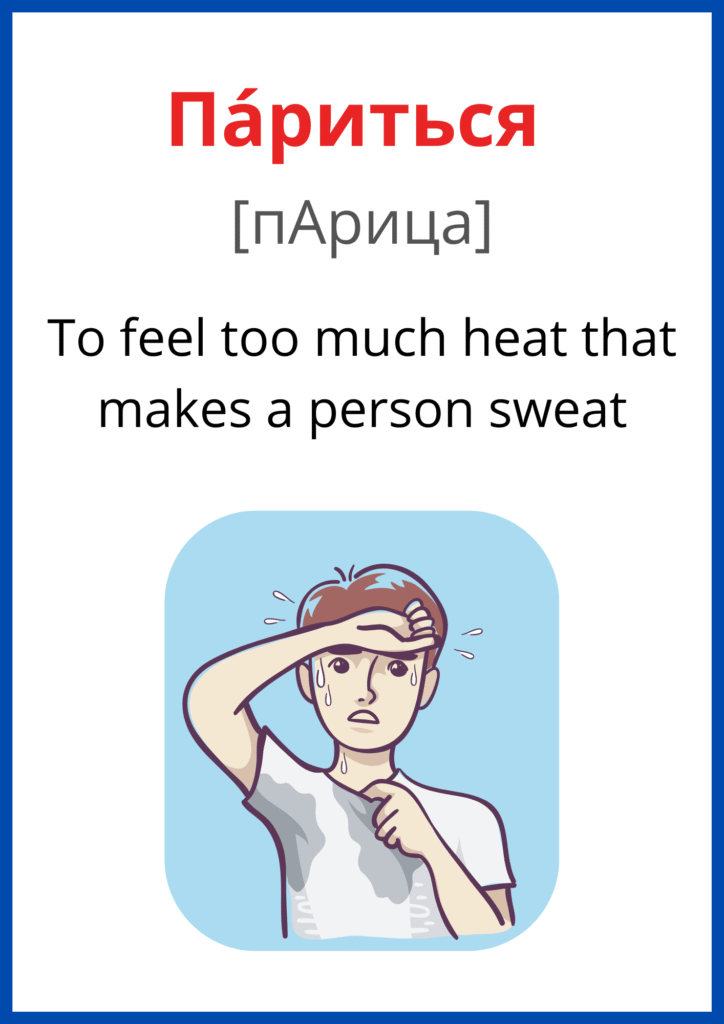
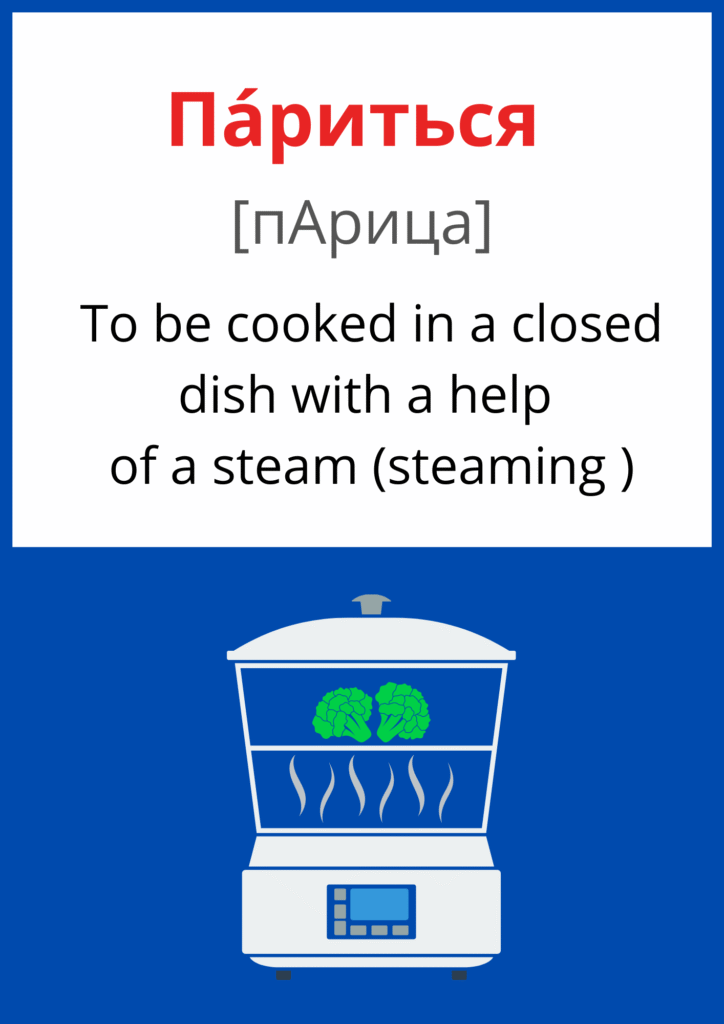
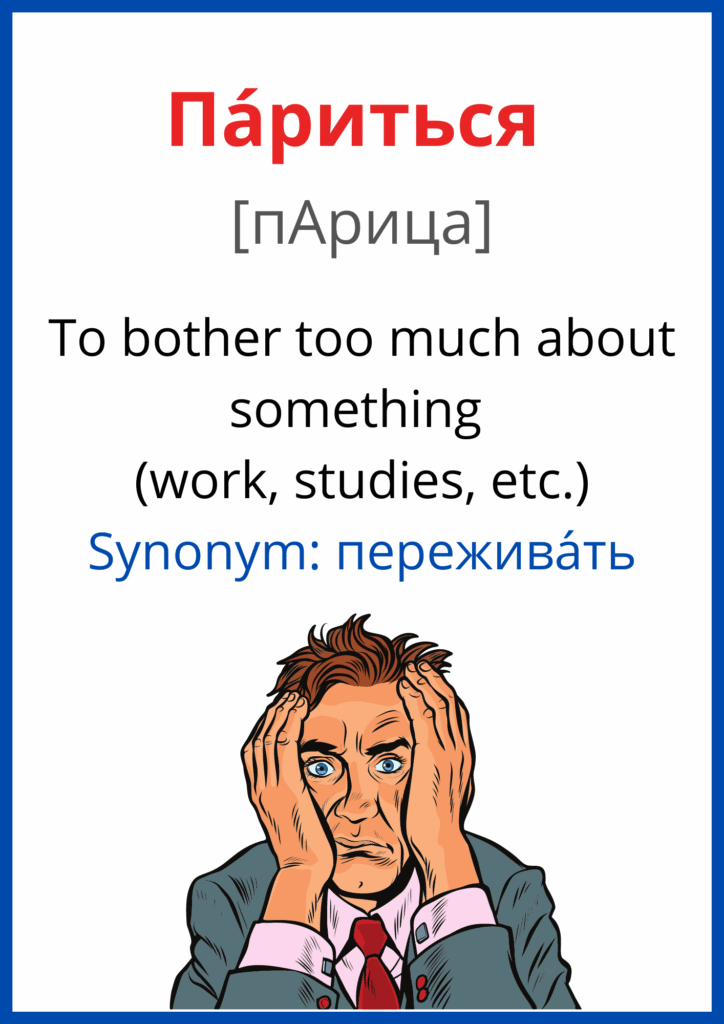
The word париться is especially useful because it is very common in informal spoken Russian. If you like learning natural everyday expressions, check out my lesson on modern Russian slang words.
Scratching, Brushing, and Running
The verb for “scratching” is incredibly dynamic in conversational Russian:
- Чесать: The literal meaning is to scratch, such as asking someone to scratch your back (почеши мне спинку). But in slang, it is used to describe moving quickly or walking away. If someone is hurrying, you can ask, “Куда ты чешешь?” (Where are you hurrying to?), or if you want someone to leave, you can aggressively say, “Чеши отсюда” (Get out of here / Scram).
- Чесать языком: Literally translating to “scratching with the tongue,” this idiomatic expression means to chatter, gossip, or talk nonsense. A boss might tell a lazy worker: “Хватит чесать языком, иди работай” (Stop chattering and go work)
More examples of Russian words with several meanings are given in the video lesson above.
Key Rules for Understanding Multi-Meaning Words
Analyzing these confusing terms reveals a few key rules of the Russian language that will help you decode new vocabulary on the fly:
- The Rule of Figurative Slang (Physical to Psychological). Russians love taking literal, physical actions and using them to describe mental states or social situations. Getting steamed in a sauna (париться) perfectly captures the feeling of being stressed out. Scratching (чесать) turns into the repetitive, annoying action of gossiping (чесать языком).
- The Rule of Contextual Definitions. A word like пара requires you to pay strict attention to the setting. If you are in a clothing store, it means a pair of items. If you are chatting with friends, it means “a few”. If you are looking at a university schedule, it means a lecture. Context is the ultimate dictionary.
- The Rule of Transformative Prefixes. In Russian, adding a small prefix to a base verb completely changes the action. Let’s look at the base verb чесать (to scratch):
- Add рас-: Расчесать means to thoroughly comb your hair (расчесать волосы).
- Add про-: Прочесать means to systematically comb through a territory, like police searching a district for a criminal (прочесать район).
- Similarly, adding за- to париться creates запариться, turning the act of “worrying” into a state of “complete exhaustion from doing something”
There is a slight difference between the words with several meanings and homonyms. If you want to go deeper into this topic, you can also read my guide to Russian homonyms, where I explain confusing Russian words that look or sound the same but have completely different meanings.
A perfect example of a tricky everyday Russian word is давай. It has several uses in spoken Russian and can mean much more than its literal meaning “give.” Learn more in my lesson on what давай means in Russian.
If you enjoy learning tricky Russian vocabulary, you may also like my guides to Russian-English false friends and Russian-English similar words. They will help you avoid confusing words and quickly expand your Russian vocabulary.
If you have recently started to learn Russian language, you should absolutely have my free guide ‘Essential Russian Words and Expressions to Understand Spoken Russian’.
It’s also very important to know how to pronounce Russian words correctly as not every Russian letter is pronounced the same way as it’s written. There are certain Russian pronunciation rules that are really easy to learn.
If you wish to speak Russian, you should absolutely learn how to use Russian cases. Check the most comprehensive guides to Russian cases:

FAQ: Russian Words with Several Meanings
What are Russian words with several meanings?
Russian words with several meanings are words that can be used in different contexts while still keeping a connection between their meanings. For example, one Russian word may describe a person, an object, an action, or an abstract idea depending on the situation.
Why do some Russian words have several meanings?
Some Russian words have several meanings because languages naturally develop through metaphor, association, and everyday usage. A word can start with one basic meaning and later get additional meanings that are connected to the original idea.
Why are words with several meanings confusing for Russian learners?
They can be confusing because learners often memorize only one translation. But Russian words do not always match English words one-to-one. The same Russian word may need different English translations depending on the context.
How should I learn Russian words with several meanings?
Learn them in full phrases and real examples instead of memorizing isolated translations. Write down two or three common contexts for each word, listen to native speech, and pay attention to how the meaning changes in different situations.
Should beginners learn Russian words with several meanings?
Yes, but beginners should start with the most common meanings first. You do not need to memorize every possible meaning of a word immediately. Learn the basic meaning, then add new meanings gradually when you meet them in real conversations, videos, stories, or songs.
Are Russian words with several meanings the same as homonyms?
No, they are not exactly the same. Words with several meanings usually have related meanings and often belong to the same part of speech. Russian homonyms, on the other hand, are words that look or sound the same but have different and unrelated meanings.