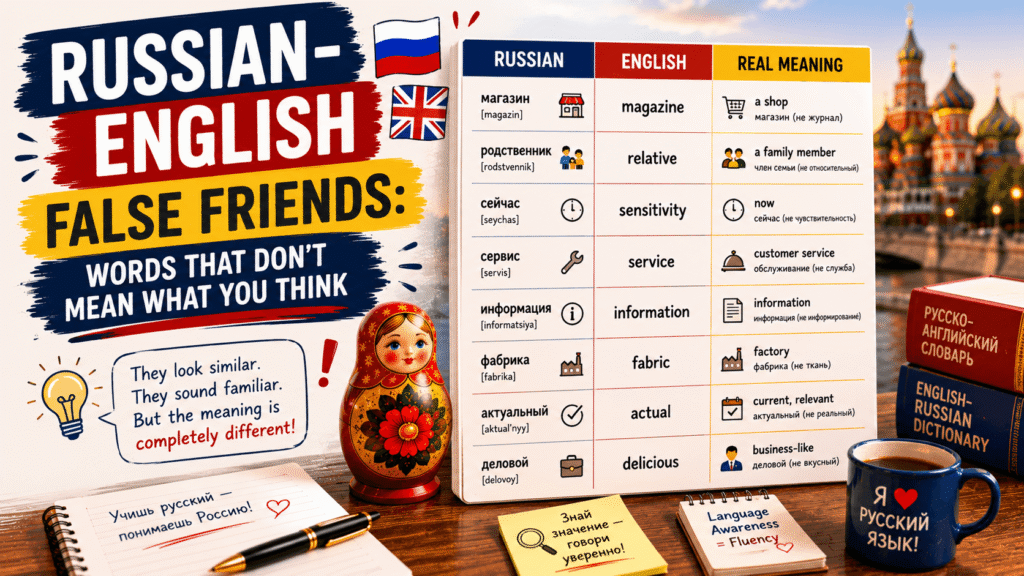
Did you know that there are many false Russian-English friends or as we should call them “false cognates”. False Russian cognates are the words that sound and look almost the same in English language but have a completely different meaning. So, these are not real cognates that have the same meaning in both languages (You can read my post on Russian-English similar words and cognates to learn 800 Russian-English similar words at once).
Russian-English false friends are words that look or sound similar in Russian and English but have different meanings. These words can be tricky because they seem familiar at first sight. You may think you already know them, but the real meaning can be completely different.
For example, the Russian word магази́н does not mean “magazine.” It means “shop” or “store.” The English word “magazine” is журна́л in Russian.
Another example is арти́ст. It looks like “artist,” but in Russian it usually means an actor, performer, or entertainer. If you want to say “artist” as a person who paints or draws, use худо́жник for a man and худо́жница for a woman.
False friends are not just funny mistakes. They can also create real confusion in conversation, reading, translation, and listening comprehension. That is why it is useful to learn them as early as possible.
Table of Contents
List of Russian-English false friends (cognates) with English translation
Акко́рд vs Accord
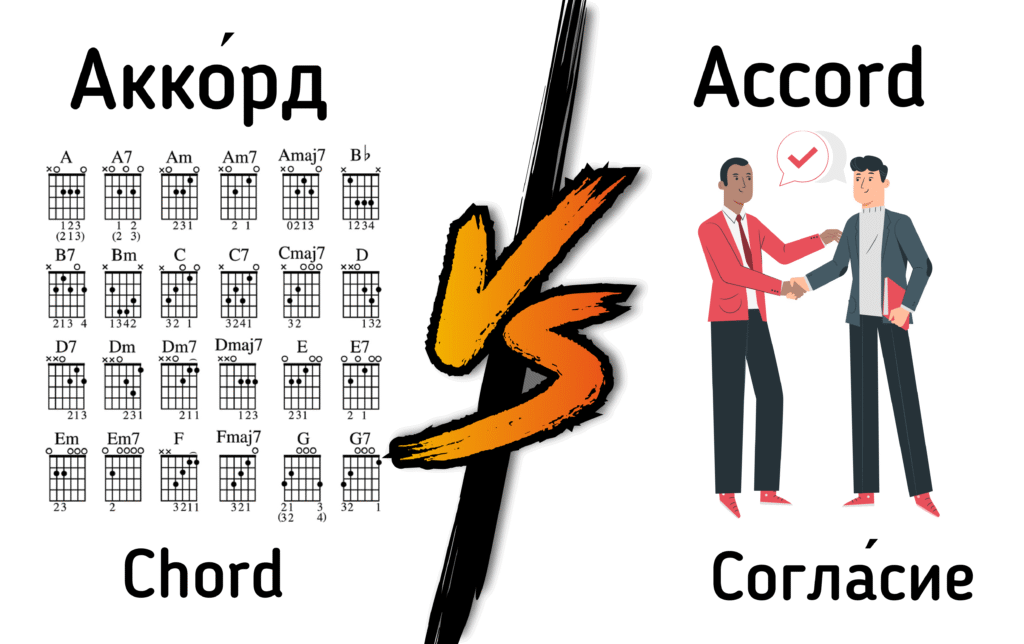
Акко́рд [akórd]– chord vs Accord – согла́сие [saglásiye].
Ex.: – Ну как ты играешь! Это же неправильный аккорд!
(How are you playing! This is a wrong chord).
Арти́ст vs Artist
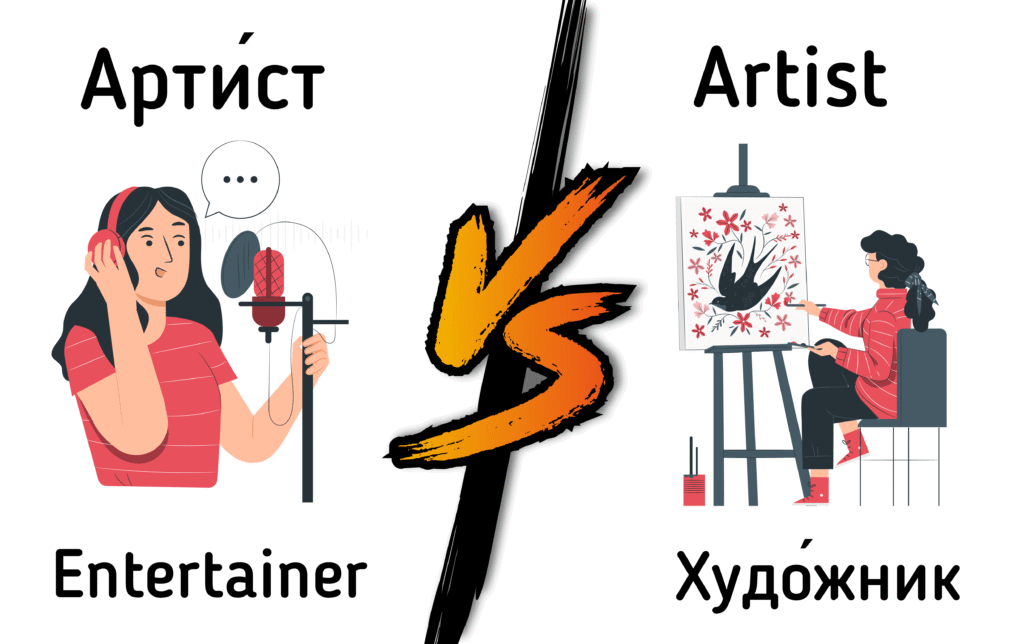
Арти́ст [artist]– entertainer vs Artist– худо́жник [hudozhnik].
Please, note that there are also feminine forms for these words: арти́стка / худо́жница (feminitives)
Ex.: – Он прекрасный артист и добрый человек! (He is a great entertainer and a kind person).
Аккуратный vs Accurate
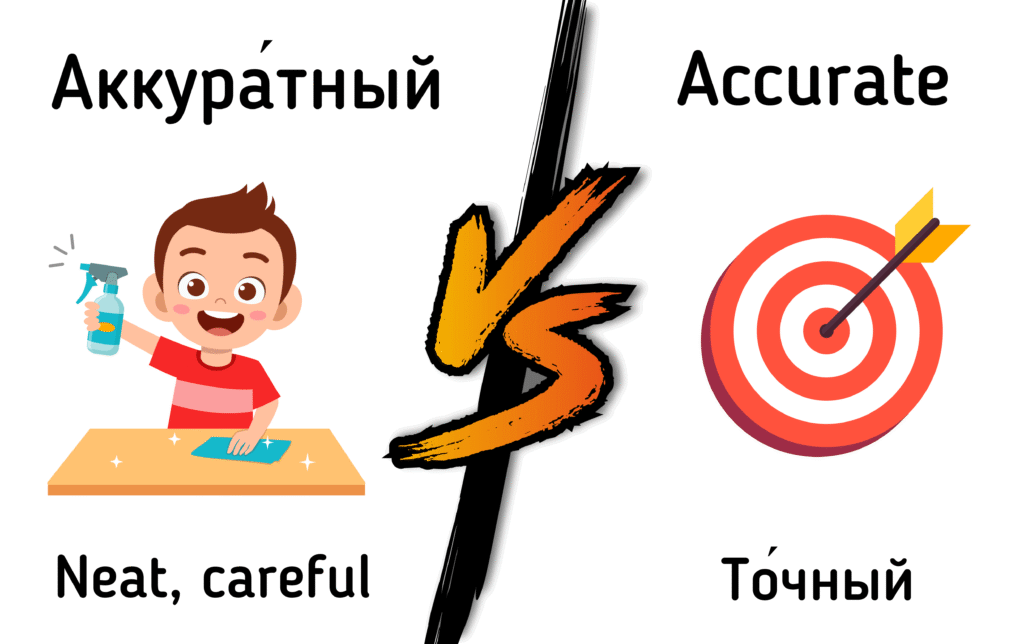
Аккуратный [artist]– neat, careful vs Accurate – точный [hudozhnik].
Ex.: Иван – аккуратный мальчик и любит чистоту (Ivan is very careful and likes when it’s clean).
Please, notice that аккуратнЫЙ is a masculine form of this adjective. Feminine form is аккуратнАЯ, neuter form is аккуратнОЕ, Plural form is аккуратнЫЕ.
Балло́н vs Baloon
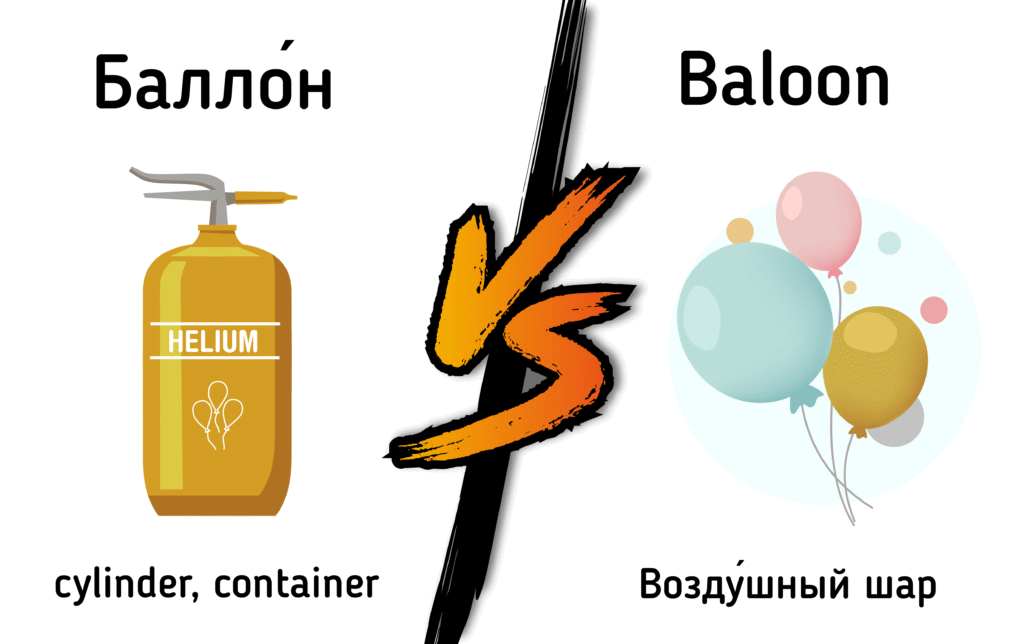
Балло́н [balon]– cylinder vs Baloon – возду́шный шар [vazdushnyi shar].
Ex.: У меня есть баллон с гелием. Давай надуем воздушные шары!
(I have a helium tank (container). Let’s inflate baloons).
Ба́нда vs Band
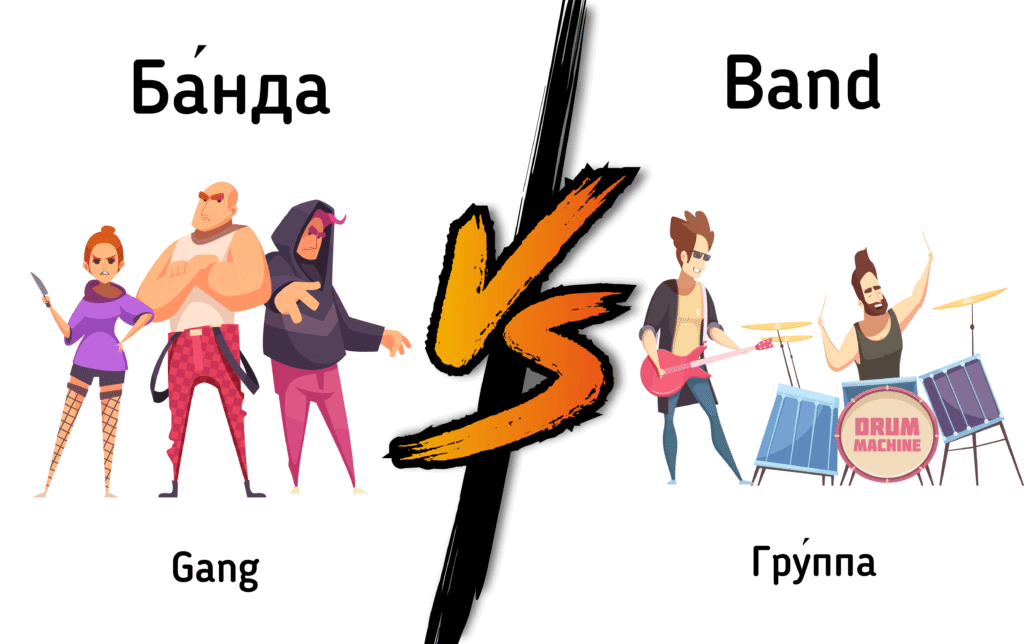
Ба́нда [banda] – gang vs Band – гру́ппа [grupa].
Ex.: Это опасная уличная банда (This is a dangerous street gang).
Лист vs list
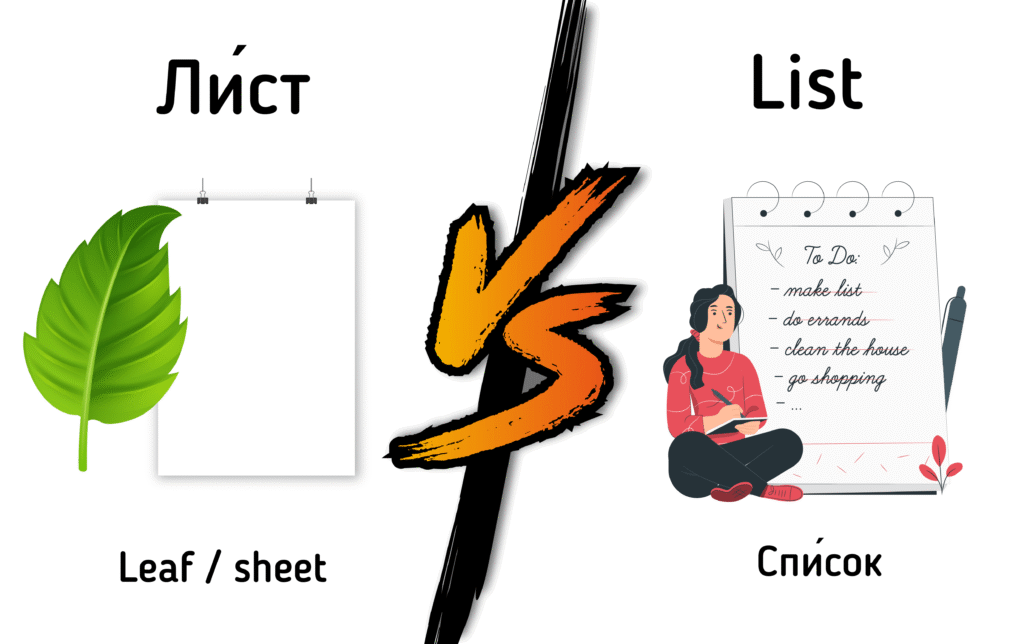
Лист [list] – leaf/sheet vs list – список [spisok].
Ex.: Дай мне, пожалуйста, лист бумаги.
(Give me, please, a sheet of paper).
Магазин vs magazin
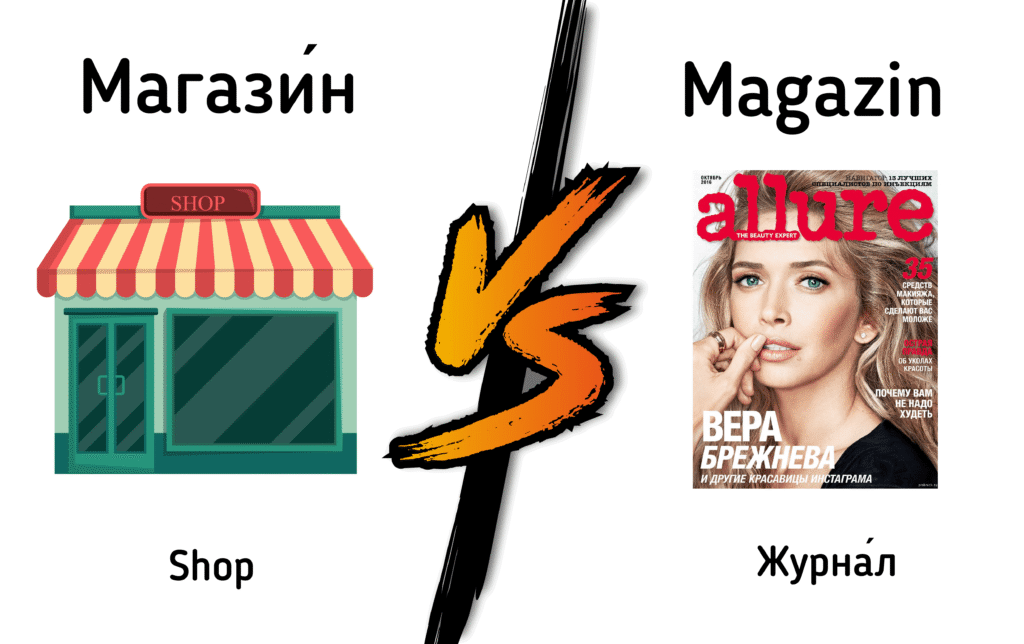
Магазин [magazin] – shop vs magazin – журнал [zhurnal].
Ex.: Мне нужно сходить в магазин, чтобы купить журнал (I need to go to the shop to buy a magazin).
Фами́лия vs Family
Фами́лия means surname or last name.
English “family” is семья́ in Russian.
Examples:
Какая у вас фами́лия?
What is your surname?
Моя́ семья́ живёт во Фра́нции.
My family lives in France.
Симпати́чный vs Sympathetic
Симпати́чный means nice, pleasant, or good-looking.
English “sympathetic” is сочу́вствующий or понима́ющий depending on the context.
Examples:
Он о́чень симпати́чный.
He is very nice / good-looking.
Она́ о́чень понима́ющая.
She is very sympathetic / understanding.
Презерватив vs Preservative
Презервати́в means condom.
English “preservative” is консерва́нт in Russian.
Examples:
В э́том проду́кте нет консерва́нтов.
There are no preservatives in this product.
This is one of the classic embarrassing false friends, so it is definitely worth remembering.
Интеллиге́нтный vs Intelligent
Интеллиге́нтный does not simply mean “intelligent.” It usually describes a cultured, educated, polite, and morally refined person.
English “intelligent” is у́мный.
Examples:
Он у́мный студе́нт.
He is an intelligent student.
Она́ интеллиге́нтная же́нщина.
She is a cultured and refined woman.
If you want to learn more of these Russian-English false cognates, you can watch my video.
Video Lesspn “Learn Russian-English false friends“
If you have recently started to learn Russian language, you should absolutely have my free guide ‘Essential Russian Words and Expressions to Understand Spoken Russian’.
It’s also very important to know how to pronounce Russian words correctly as not every Russian letter is pronounced the same way as it’s written. There are certain Russian pronunciation rules that are really easy to learn.
If you wish to speak Russian, you should absolutely learn how to use Russian cases. Check the most comprehensive guides to Russian cases:

Common Mistakes with Russian-English False Friends
- Trusting words that look familiar
If a Russian word looks like English, it may be a true cognate, but it may also be a false friend. Always check the meaning in context.
- Learning only one translation
Some words have several meanings. For example, лист can mean a leaf or a sheet of paper. Learn the most common meanings with examples.
- Ignoring stress marks
Russian word stress can change how natural a word sounds. For example, магази́н has stress on the last syllable, and фами́лия has stress on the second syllable.
- Translating from English word for word
If you want to say “magazine,” do not automatically say магази́н. The correct word is журна́л.
- Forgetting the correct Russian alternative
When you learn a false friend, always learn the correct Russian word too. For example: family = семья́, surname = фами́лия.
FAQ: Russian-English False Friends
What are Russian-English false friends?
Russian-English false friends are words that look or sound similar in Russian and English but have different meanings. For example, магази́н means “shop,” not “magazine.”
Are false friends the same as cognates?
False friends are a type of false cognate. They look similar to words in another language, but their meaning is different. True cognates look similar and have the same or similar meaning.
Are all similar Russian and English words false friends?
No. Many Russian and English words are true cognates, such as телефо́н, рестора́н, му́зыка, and компью́тер. But some similar-looking words are false friends, so you should always check the meaning.
How can I learn Russian false friends faster?
Learn false friends in pairs with the correct translation: магази́н — shop, журна́л — magazine; фами́лия — surname, семья́ — family. Then create short example sentences to remember them in context.
What is the most common Russian false friend?
One of the most common Russian false friends is магази́н. It looks like “magazine,” but it means “shop” or “store.” The Russian word for “magazine” is журна́л.