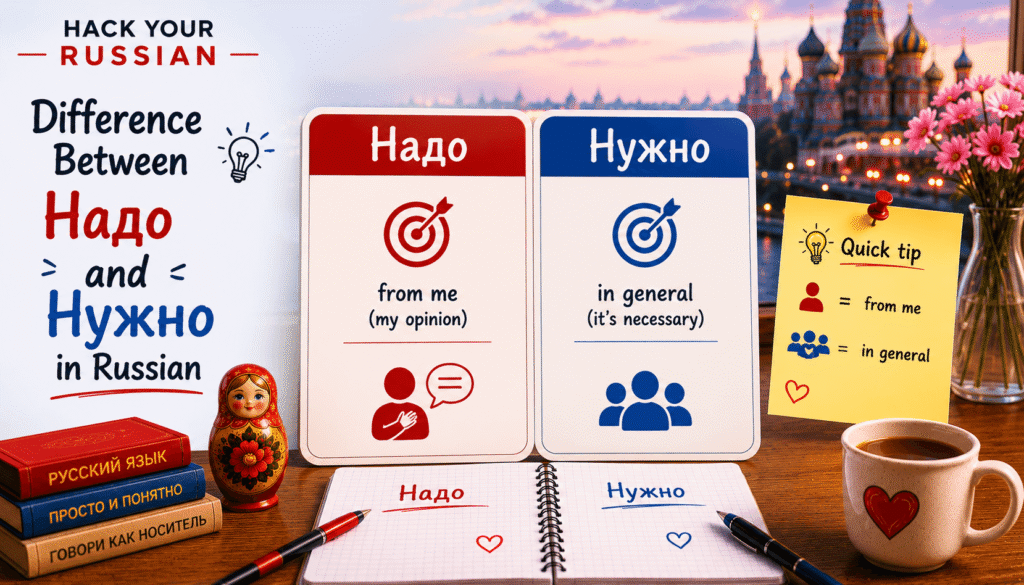
Russian learners often get confused by the words надо and нужно because both can mean “need to”, “must”, or “it is necessary”. In many everyday situations, they are very close and sometimes even interchangeable.
For example:
Мне надо идти (I need to go).
Мне нужно идти (I need to go).
Both sentences are correct and natural.
In this guide, you will learn when надо and нужно mean the same thing, when only нужно works, how to use нужен / нужна / нужно / нужны, and how to avoid the most common mistakes learners make.
If you are just starting Russian, you may also like my list of basic Russian phrases for beginners.
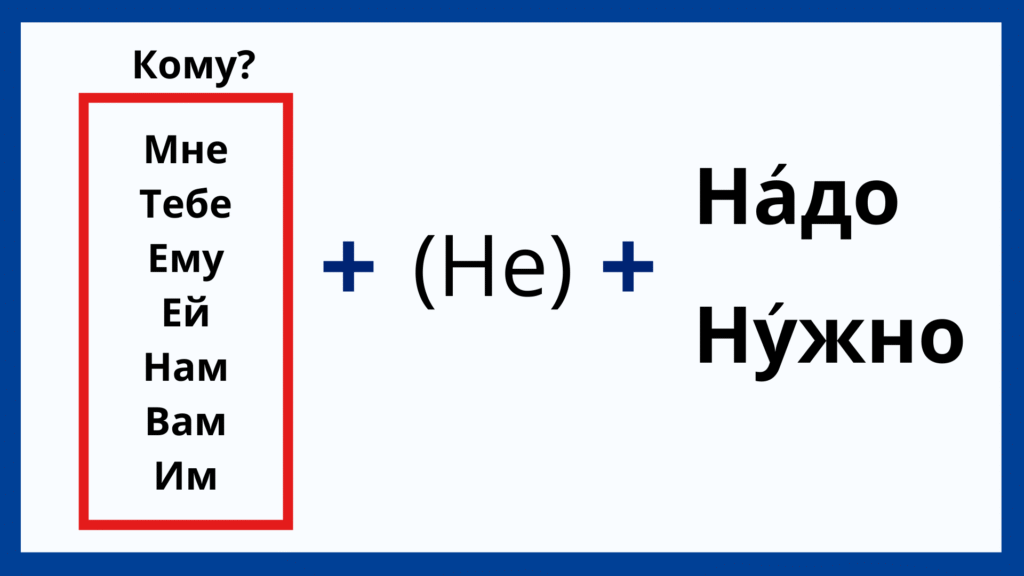
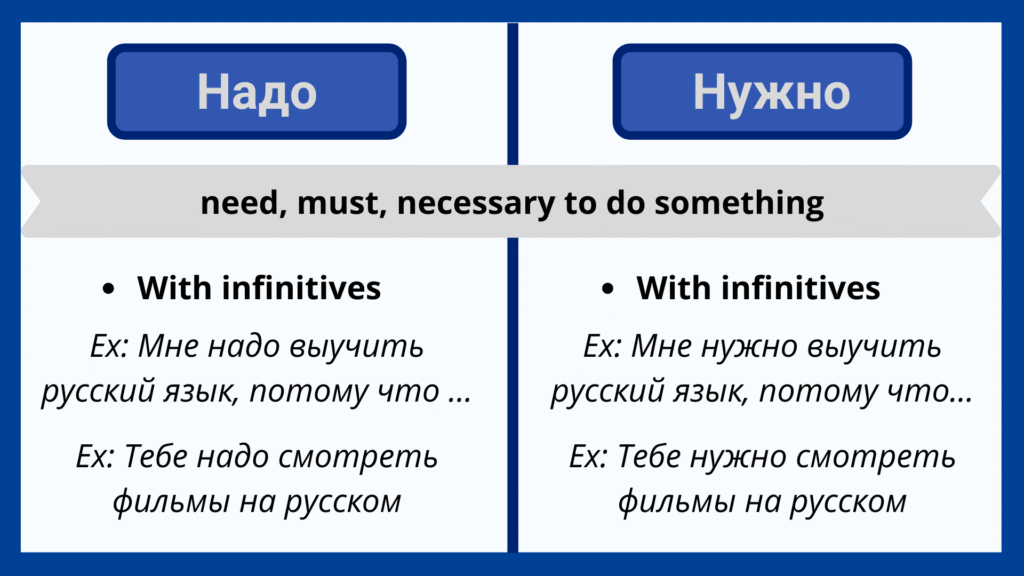
Overall, you can use both these words надо and нужно when you want to express an ideas that someone needs (or doesn’t need something). On the first place you can put a pronoun (to whom) or any noun that shows who exactly needs something (it should be in a Dative case – дательный падеж).
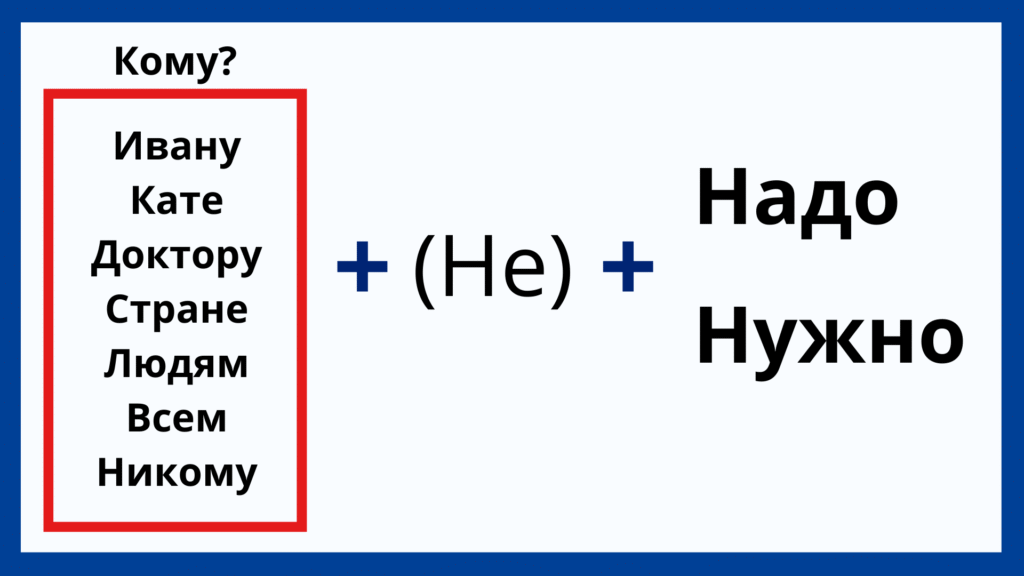
As for the common sides, we can use infinitive forms of verbs with both these forms надо and нужно. Look at the explanation with examples in Russian below.
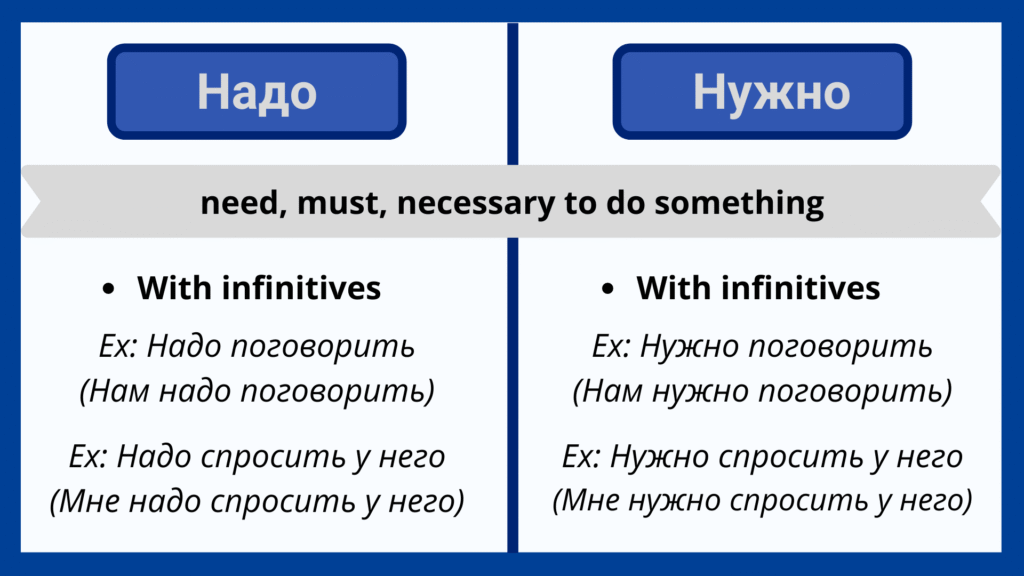
One can also omit the pronouns indicating the subject (who needs something) when it’s obvious from the context. Look at the examples below. In the first example, you can imagine your friend who wants to talk to you and says “Надо поговорить”. You understand that he wants to talk to you and not to a girl sitting next to you. The second example also depends on the context and we can omit ‘мне’ if it’s obvious from the conversation.
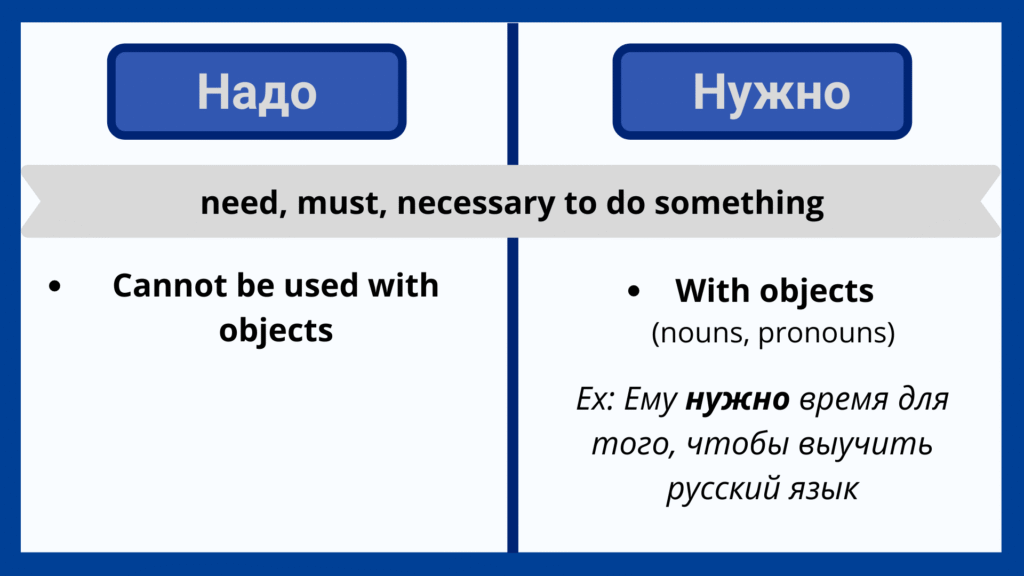
But what about the differences between using these words ‘надо‘ and ‘нужно‘. The word надо cannot be used with objects (nouns, pronouns) while ‘нужно‘ can be followed by any objects. Look at the examples below
Let’s look at some other examples with the word нужно and different objects.
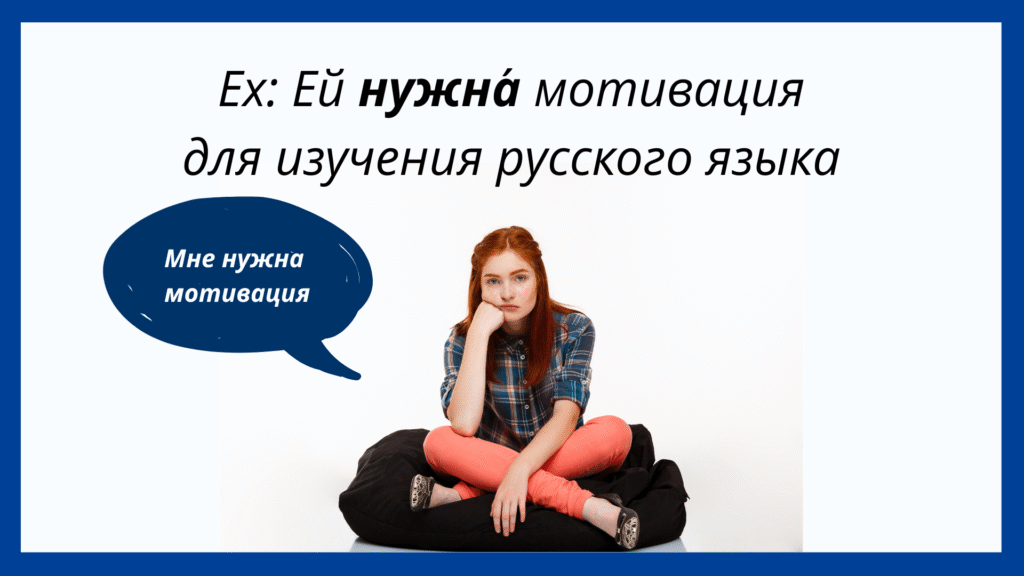
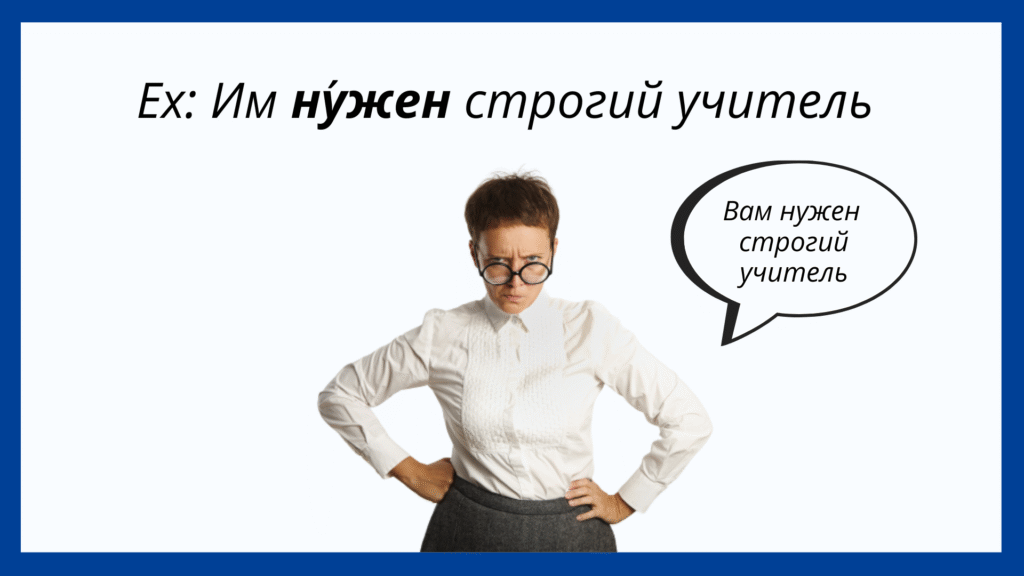

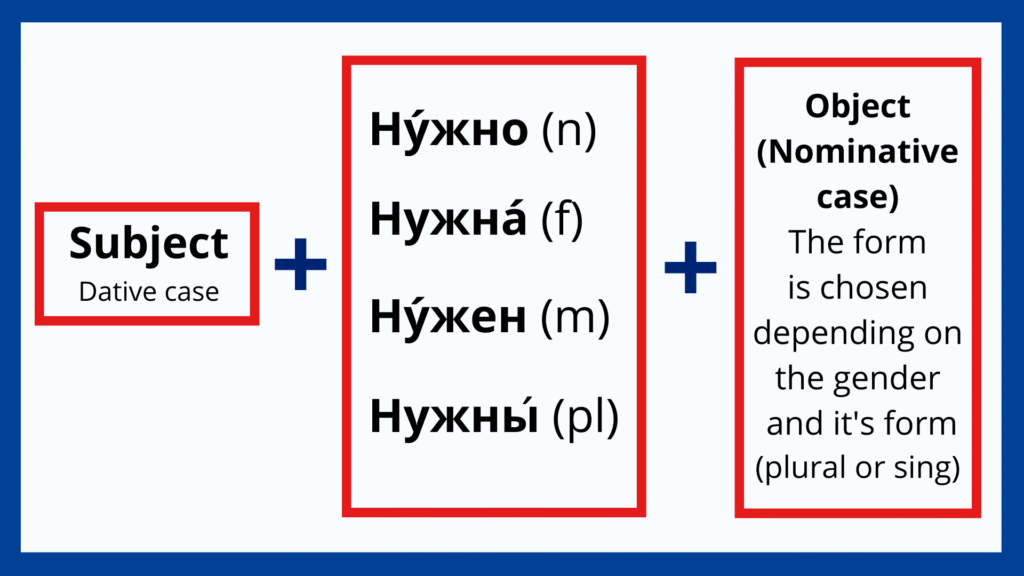
Have you noticed that the word нужно has changed its form? Нужно, нужна, нужен, нужны. Do you know why? Of course, it depends on the gender of an object that is used with the word нужно. If it’s a neuter noun, then you need to use a form нужно. If it’s a feminine noun – use a form нужна, masculine noun – нужен, plural noun (any gender) – нужны.
If you want to see a full explanation of this topic with interesting examples, then you can watch this free Russian video lesson.
Difference between Нужно and Надо. Учим русский в контексте.
Russian video lesson on the difference between НАДО and НУЖНО. In this Russian lesson in Russian I will explain you how to use these two words in speech. We will also analyze and learn an amazing Russian poem “Человеку надо мало” by Robert Rozhdestvensy. Please, note that this video is entirely in Russian, but in slow Russian so you can understand it if you turn on Russian subtitles. There is also a transcript of this lesson in English with useful tasks here.
You can find a song based on this poem here. I hope that you will like this song!
I also want to share with you another good song called “What do you need for happiness?” It will help you to practice the verb ‘нужно’. Think and make up your list of things that you need for happiness.
If you have recently started to learn Russian language, you should absolutely have my free guide ‘Essential Russian Words and Expressions to Understand Spoken Russian’.
It’s also very important to know how to pronounce Russian words correctly as not every Russian letter is pronounced the same way as it’s written. There are certain Russian pronunciation rules that are really easy to learn.
If you wish to speak Russian, you should absolutely learn how to use Russian cases. Check the most comprehensive guides to Russian cases:

Common Mistakes with Надо and Нужно
Mistake 1: Saying “я надо”
In Russian, use the Dative case:
Correct:
Мне надо идти.
I need to go.
Incorrect:
Я надо идти.
Mistake 2: Using надо with nouns
Do not use надо directly with a noun.
Incorrect:
Мне надо ручка.
Correct:
Мне нужна ручка.
I need a pen.
Mistake 3: Forgetting gender and number
When you use нужен / нужна / нужно / нужны, the form must agree with the noun.
Мне нужен билет.
I need a ticket. — masculine
Мне нужна виза.
I need a visa. — feminine
Мне нужно время.
I need time. — neuter
Мне нужны деньги.
I need money. — plural
Mistake 4: Translating “I need” word for word
English says “I need”, but Russian often uses мне нужно / мне надо. Do not translate every sentence directly from English.
Mistake 5: Using слишком формально everywhere
Нужно is safe and neutral, but in casual speech Russians often say надо. For example, мне надо домой sounds very natural in everyday conversation.
FAQ: Надо vs Нужно in Russian
What is the difference between надо and нужно in Russian?
Надо and нужно can both mean “need to”, “must”, or “it is necessary” before a verb. For example, мне надо идти and мне нужно идти both mean “I need to go.” But when you need a specific object, use нужен / нужна / нужно / нужны, not надо.
Can I use надо and нужно interchangeably?
Sometimes, yes. Before a verb, надо and нужно are often interchangeable: мне надо работать and мне нужно работать both mean “I need to work.” However, before a noun, only нужен / нужна / нужно / нужны is correct.
When should I use нужен, нужна, нужно and нужны?
Use these forms when you need a specific object. The form depends on the gender and number of the noun: нужен for masculine nouns, нужна for feminine nouns, нужно for neuter nouns, and нужны for plural nouns.
Is надо more informal than нужно?
Надо often sounds more conversational and direct, while нужно can sound a little more neutral or formal. However, native speakers use both words very often, and the difference is not always strict.
How do you say “I don’t need to” in Russian?
You can say мне не надо or мне не нужно before a verb. For example, мне не нужно идти means “I don’t need to go.”