Before choosing a book, ask yourself one simple question: what do I want to improve right now?
If you want to speak more naturally, choose a course with audio and dialogues.
If you want to read more, choose graded short stories for intermediate learners.
If you want to understand grammar, choose a clear grammar reference or a focused guide on Russian cases.
If you want to grow your vocabulary, choose resources with repeated words in context, not just long vocabulary lists.
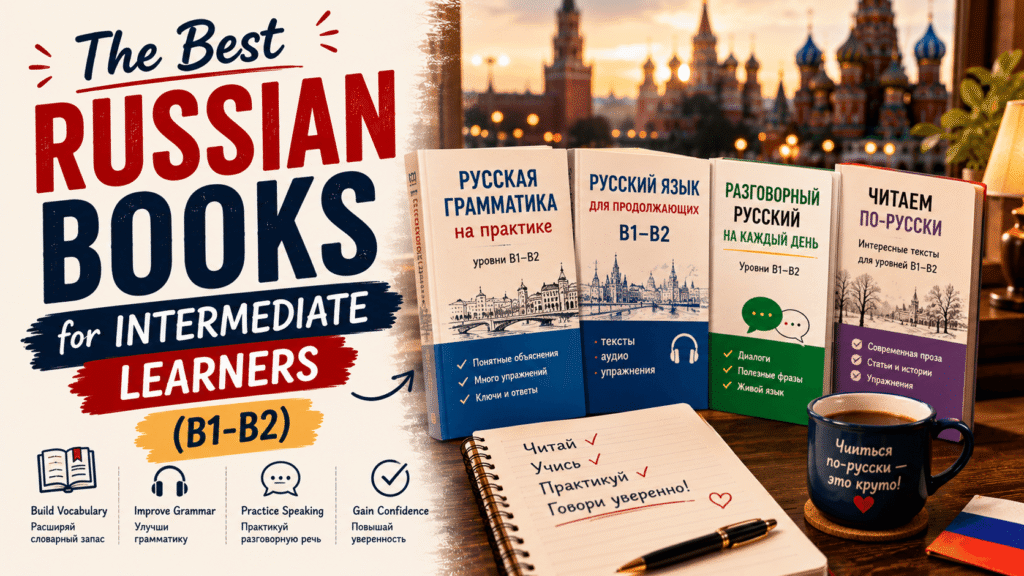
List of the most useful books to learn Russian for intermediate level
Intermediate learners usually need a mix of different resources. One book rarely solves everything. Here are the main types of books that can help you move from B1 to B2 and beyond.
Russian Short Stories for Intermediate Learners
Short stories are one of the best tools for intermediate Russian learners. They help you see grammar, vocabulary, and sentence structure in context. You also learn how Russian people actually build sentences, react, ask questions, and express emotions.
Short stories are useful because they are not too long. You can finish one story, review the vocabulary, and feel real progress.
When reading short stories, do not try to understand every single word immediately. First, read for the general meaning. Then reread the story and focus on useful phrases, verbs, and grammar patterns.
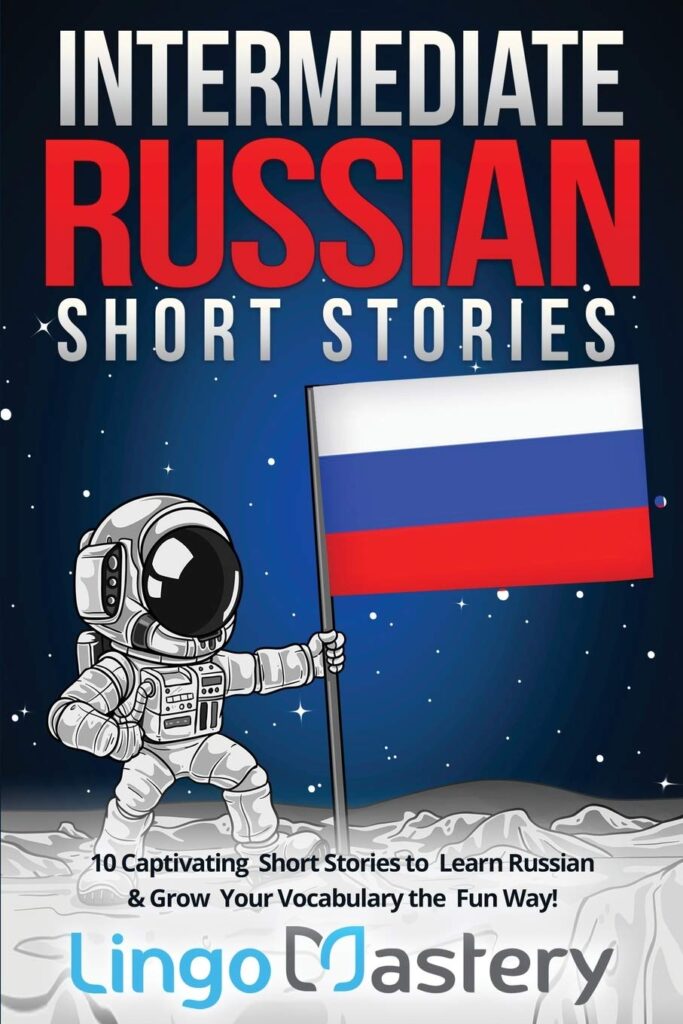
Intermediate Russian Short Stories: 10 Captivating Short Stories to Learn Russian
It is very important to find really captivating and interesting stories to improve your Russian at Intermediate level. This book contains 10 great stories on various topics that you will find easy to relate to.
Each story is carefully chosen and introduces certain grammatical patterns in an easy and efficient way so that you don’t need to memorize any Russian grammar rules. There are many natural dialogues in each story that one can use in everyday situations. Overall this book will help you boost you Russian vocabulary, painlessly learn useful Russian grammar patterns and improve your general comprehension. You will find a list of words with translation in English after each chapter.
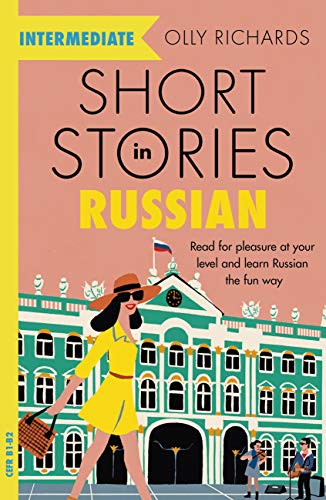
Short Stories in Russian for Intermediate Learners
Here is a famous story book for Russian language learners. If you have already read their book for beginners, you should know how it works. There are eight interesting stories in a variety of genres, including science fiction, crime, history and others. This makes it really fun to read this Russian stories and you learn new Russian words without even noticing it. They provide real-life dialogues that will improve your conversational Russian and give you more confidence speaking Russian. Russian grammar is presented in a friendly relaxed way without putting emphasis on grammar rules. Therefore, you learn Russian grammar a natural way. This book also provides a list of all difficult Russian words with English translation. Just great!
Russian Vocabulary Books for Intermediate Learners
Vocabulary books and courses are useful if they teach words in context. The worst way to learn vocabulary is to memorize isolated words without examples.
For intermediate Russian, it is much better to learn words in phrases:
принима́ть реше́ние
to make a decision
обраща́ть внима́ние
to pay attention
име́ть значе́ние
to matter / to be important
с одно́й стороны́
on the one hand
всё зави́сит от…
it all depends on…
These chunks will help you speak and write more naturally.
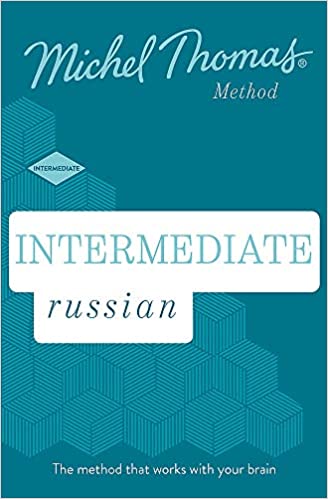
Perfect Russian Intermediate Course: Learn Russian with the Michel Thomas Method
This is the most amazing language course ever. But don’t expect any miracles. This Russian language course is really the best course to give you the basics to actually start speaking Russian. It does not provide much emphasis on grammar but rather help you understand the system behind Russian language. Believe it or not, but you will start speaking Russian with almost no grammar knowledge. However, there also some cons of this method as it does not teach you written Russian, only conversational. Therefore, I hightly recommend this Russian course only as a starting point. It will boost your vocabulary and make you feel more confident speaking Russian language.
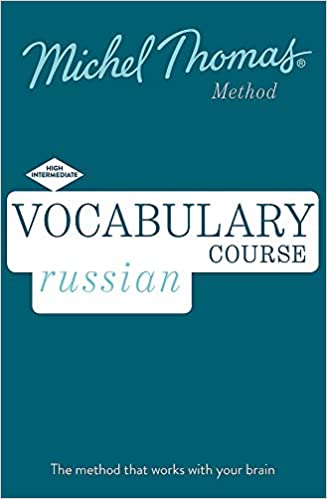
Russian Vocabulary Course (Michel Thomas Method)
This is another Russian course by Michel Thomas that is specifically focused on vocabulary. In particular, during this course you will learn 600 new words and everyday phrases. But the most important you will learn how these words are formed that will help you to form more Russian words of the same structure. As in its main course, the Method of Michel Thomas includes an audio from a class session where 2 students learn Russian language with a teacher. This Russian course does not require you to do any hometasks as you can learn everything you need while listening to these Russian audio lessons. This method is really the best for Russian language learning and I highly recommend you this course.
Russian Grammar Books for Intermediate Learners
At the intermediate level, grammar books become more useful than they were at the beginner level. When you already know some Russian and have seen many examples, grammar rules start to make more sense.
However, try not to read a grammar book like a novel from page one to the end. Use it as a reference. When you meet a confusing topic, such as verb aspects, motion verbs, or Russian cases, open the relevant section and study it with examples.
Grammar should support your communication, not replace it.
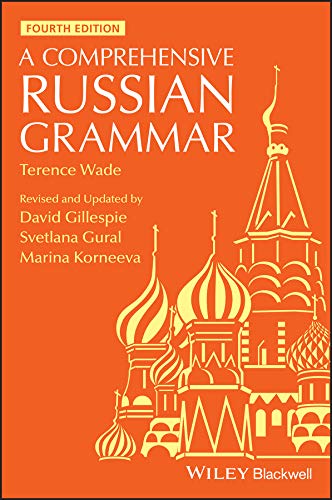
A Comprehensive Russian Grammar
I am against learning Russian grammar the usual way with a book that explains in details grammar rules. However, as soon as you reach an Intermediate level, it is a very good idea to look through some good grammar books in order to polish your Russian grammar and to analyze some grammatical patterns. The thing is that when you are already using the language at a decent level, you can better understand the grammar and you might even like analyzing these grammatical patterns. This book “Comprehensive Russian grammar” is really worth checking out as it provides clear explanations and examples for each grammatical pattern. However, I don’t recommend you to focus too much on grammar anyway.
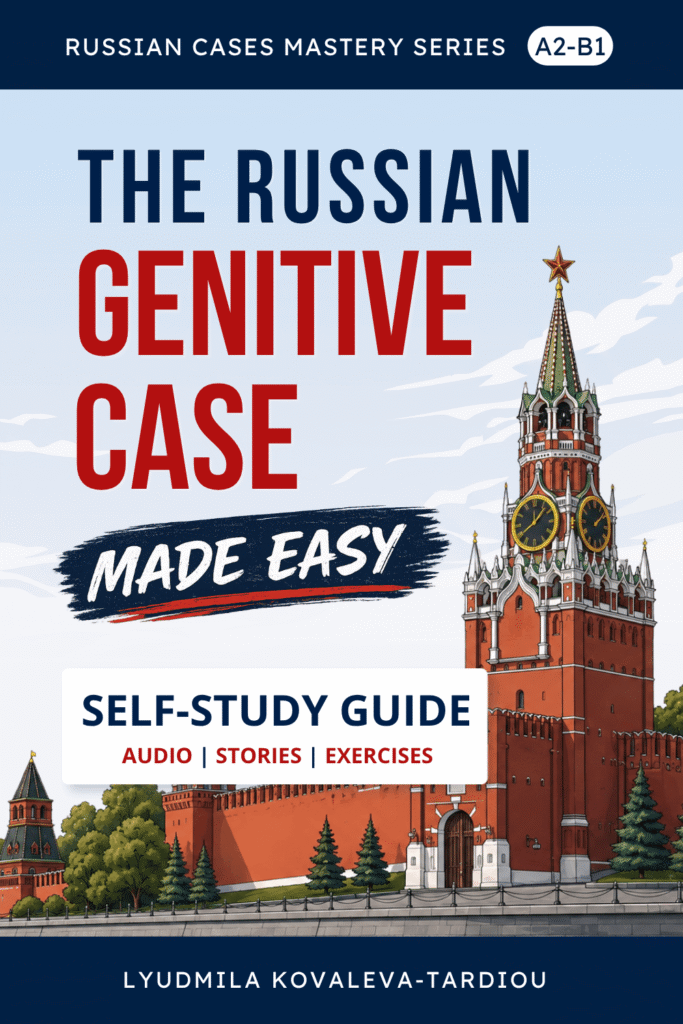
One of the most challenging and confusing Russian cases is the Genitive case. The Russian Genitive case primarily indicates possession. However, its use extends beyond clear ownership and appears in situations where the connection to possession isn’t always obvious.
This guide is not a simple book with grammar explanations. It is a whole course that will help you master the Russian Genitive case in a fun, engaging and easy way.
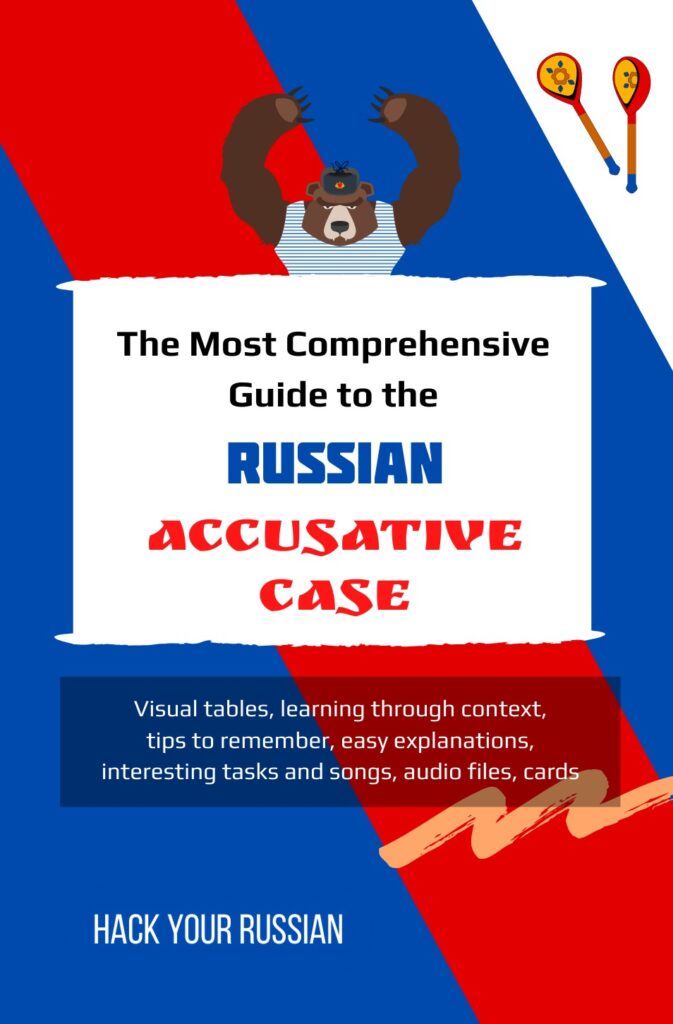
The Most Comprehensive Guide to the Russian Accusative Case
The Russian Accusative case changes form based on the noun’s animacy. For inanimate objects, it answers “Что?” (What?) and matches the Nominative case. For animate objects, it answers “Кого?” (Who(m)?) and resembles the Genitive case, depending on gender.
In this guide, you will find all situations when we need to use the Accusative case with nouns / pronouns / adjectives. This guide is not a simple book with grammar explanations. It is a whole course that will help you master the Russian Accusative case in a fun, engaging and easy way.
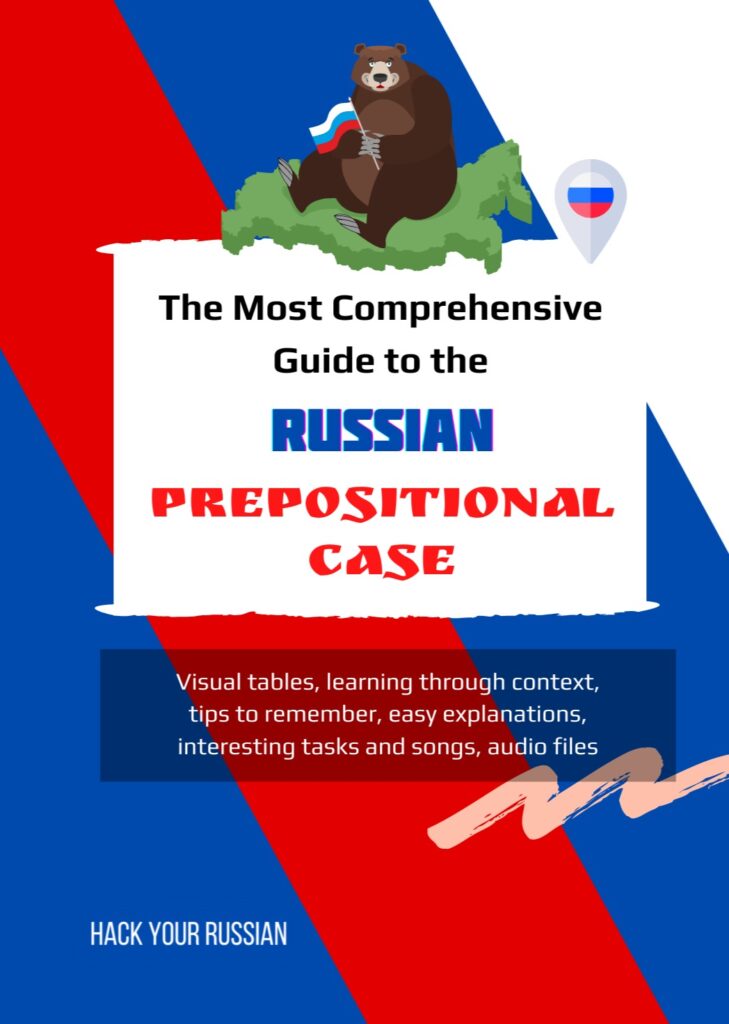
8. The Most Comprehensive Guide to the Russian Prepositional Case
The Russian Prepositional case is one of the easiest, especially compared to the Genitive and Accusative cases. It’s used only with prepositions, and its endings are limited, making it simple to form. However, knowing when to use it isn’t always straightforward.
The ‘treasure’ of this guide is a final story about a bear named Preppa (association with the Prepositional case). This story contains the key situations that require the use of the Prepositional case. This story was created based on a TPRS method (Teaching Proficiency through Reading and Storytelling) that is extremely effective for learning new languages.
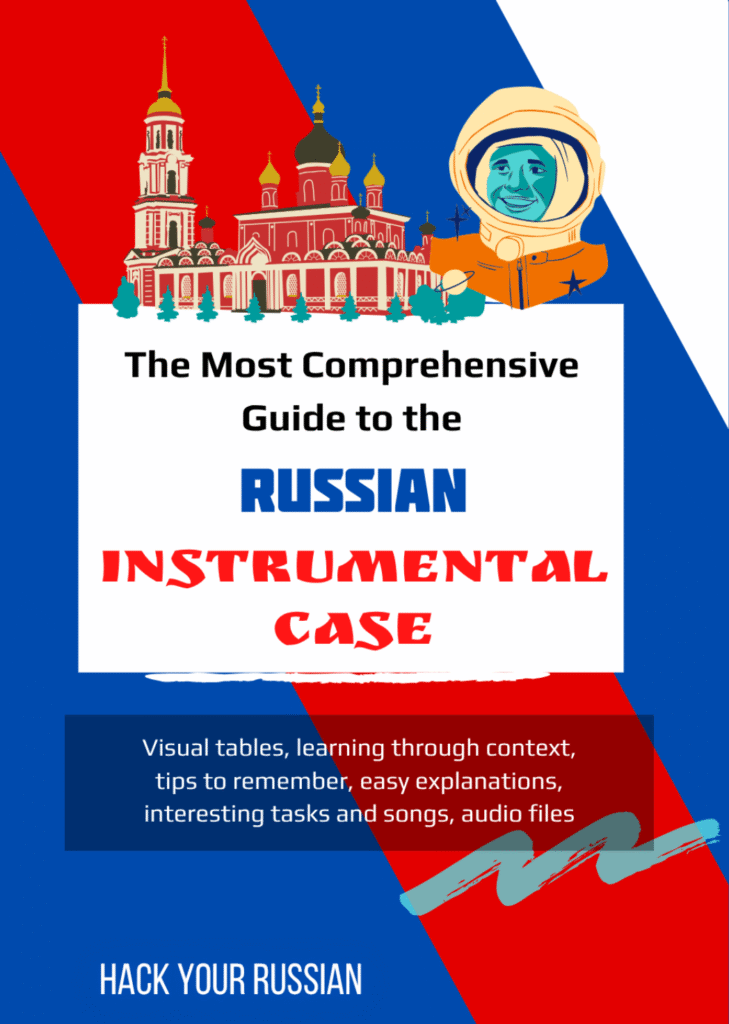
9. The Most Comprehensive Guide to the Russian Prepositional Case
The Russian Instrumental case indicates the means by which an action is performed, whether it’s a person, object, or thing. In Russian it’s called “твори́тельный паде́ж” from the verb “твори́ть” (to create). It also appears in various less obvious situations.
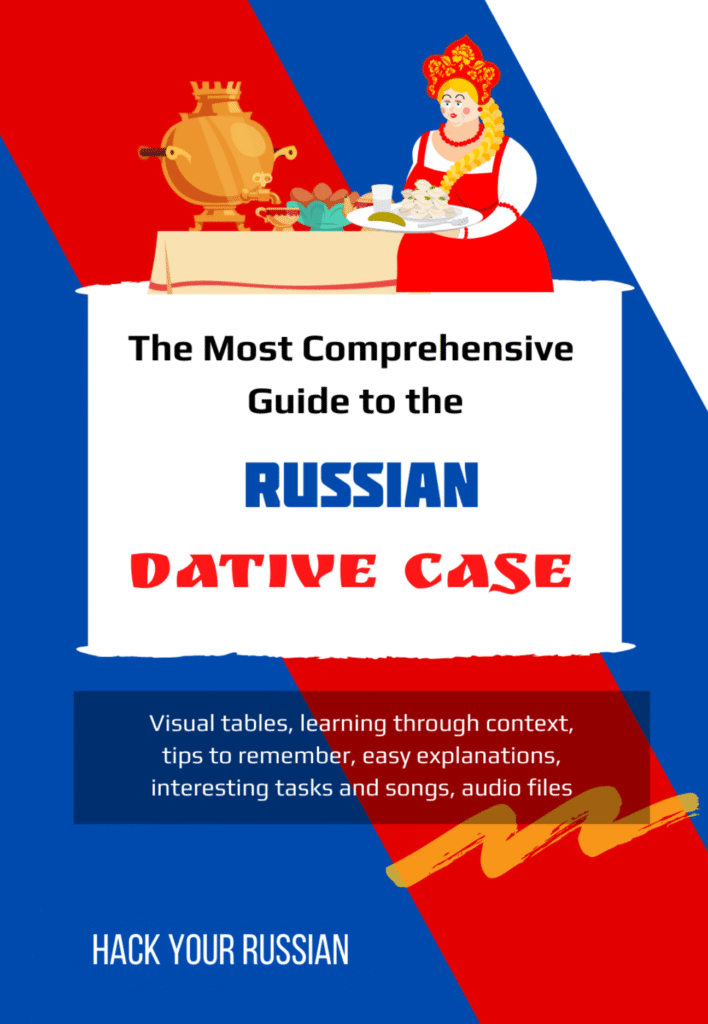
10. The Most Comprehensive Guide to the Russian Dative Case
The Russian Dative case mainly shows the connection between a giver and a recipient, whether physical, emotional, or otherwise. In Russian it is called “да́тельный паде́ж” from the verb “дать” (to give – a perfective form). It’s also used in many less obvious situations, so learning all its functions is important.
That is it! These are the best Russian books for Intermediate students that I can recommend you. Please, note that if you buy any of these books via provided links, I will earn a small comission that will help me maintain this blog. But I assure you that my review is honest and would not recommend you дерьмо (you can google to find a meaning of this word). So yeah, I will not recommend you something useless as I have analyzed and used these books myself as a teacher.
It’s also very important to know how to pronounce Russian words correctly as not every Russian letter is pronounced the same way as it’s written. There are certain Russian pronunciation rules that are really easy to learn.
And the last advice – Enjoy learning Russian! This is the key to your fluency!
Do you want more Russian authentic materials? Then watch this video on free authentic Russian resources to improve Russian vocabulary and listening skills.
Video “Free Authentic Russian Resources for Intermediate Students”
Should You Read Authentic Russian Books at B1-B2?
Yes, but carefully. Authentic Russian books can be very motivating, but they can also be frustrating if they are too difficult. Classic Russian literature, for example, is beautiful but often too hard for intermediate learners because of long sentences, old-fashioned vocabulary, and cultural references.
At B1-B2 level, it is better to start with:
- adapted books
- graded readers
- short modern stories
- simple detective stories
- children’s or young adult books
- articles on familiar topics
- dialogues and scripts
You can also read authentic Russian texts if you choose topics you already understand. For example, if you love cooking, travel, psychology, cinema, or sport, texts on these topics will be easier because you already know the context.
How to Use Russian Grammar Books Without Getting Stuck
Grammar is important, but many intermediate learners get trapped in grammar perfectionism. They think they cannot speak until they fully understand every case, aspect pair, and motion verb. But fluency does not work like that.
Use grammar books to clarify patterns you have already seen in real language.
For example:
You see the phrase Я скуча́ю по тебе́.
Then you check why Russian uses по + Dative.
You see У меня́ нет вре́мени.
Then you review the Genitive case after нет.
You see Я интере́суюсь ру́сской культу́рой.
Then you check the Instrumental case after интересоваться.
This way, grammar becomes connected to real examples and is much easier to remember.
This is exactly how my Russian case books are structured. Instead of teaching cases as abstract tables of endings, they help you understand Russian grammar through real context, useful examples, and practical situations. You learn why each case is used, how it works in natural sentences, and how to recognize these patterns when reading, listening, or speaking Russian.